
TL;DR
AI sales prospecting has moved far beyond email automation. The best tools now span three categories: voice AI for phone-first markets, email and multichannel SDR platforms, and data intelligence engines. If you sell into Indian financial services, voice AI with vernacular support will outperform any cold email tool. For global B2B, platforms like Apollo.io and Instantly offer strong starting points. But beware: 70-80% of buyers churn from AI SDR tools within three months, so picking the right category matters more than picking the shiniest feature set.
Why AI Sales Prospecting Deserves a Rethink in 2025
Here’s a number that should get your attention: 81% of sales teams are now either experimenting with or have fully implemented AI, and those teams are 1.3x more likely to report revenue growth compared to teams without AI.
The AI market for sales and marketing is projected to grow from $58 billion in 2025 to $240.59 billion by 2030. That’s not a trend. That’s a structural shift in how companies find and convert customers.
Yet most guides about AI sales prospecting tools cover the same handful of email platforms and LinkedIn scrapers. They miss the fact that in markets like India, where phone calls and WhatsApp drive the majority of sales conversations, voice AI prospecting is the real game-changer, particularly in regulated industries like banking and financial services.
This guide covers all three categories: voice AI, email and multichannel SDR, and data intelligence. It’s the only comparison that treats automated outbound calling as a first-class prospecting channel alongside email.
One more thing to keep in mind: adoption alone doesn’t guarantee results. Practitioner interviews and industry data suggest that 70-80% of customers churn within 3 months of buying AI SDR tools. The tools below are evaluated with that reality front and center.
How We Evaluated These Tools
AI prospecting tools are not interchangeable. An email sequencing platform solves a completely different problem than a voice AI agent that qualifies leads over the phone in Hindi. To make this comparison useful, each tool is evaluated across these dimensions:
Three categories:
- Voice AI Prospecting: Outbound calling, lead qualification, multilingual conversations
- Email and Multichannel SDR Platforms: Cold email, LinkedIn automation, AI-generated sequences
- Data Intelligence and Enrichment: Contact discovery, signal detection, lead scoring
Evaluation criteria:
- Pricing transparency
- Language and regional support
- Channel coverage (voice, email, LinkedIn, WhatsApp)
- User reviews and practitioner sentiment
- Industry fit (especially for BFSI and regulated sectors)
- Human-in-the-loop vs. fully autonomous operation
Why does this framing matter? Because 42% of salespeople say prospecting is the hardest part of their job, and in India specifically, sales reps spend only about 27% of their time on core selling activities. The right tool depends on where your prospects actually pick up: inbox, LinkedIn, or phone.
At-a-Glance Comparison Table
| Tool | Category | Best For | Starting Price | Voice AI | Indian Language Support | Free Trial |
|---|---|---|---|---|---|---|
| Awaaz AI | Voice AI + BFSI | Banks, NBFCs, and fintechs in India | Pay-per-minute | Yes | Yes (8+ languages) | Demo only |
| Apollo.io | Data + Email | Global SDR teams | Free / $49/mo | No | No | Yes |
| Cognism | Data Intelligence | EU/compliance-first teams | ~$15K/year | No | No | No |
| Instantly | Cold Email | Email-heavy outreach | $37/mo | No | No | Yes (14 days) |
| Amplemarket Duo | Multichannel SDR | Enterprise sales teams | ~$240/mo/user | Partial | No | Yes (14 days) |
| Clay | Data Enrichment | RevOps engineers | $134/mo | No | No | Yes (limited) |
| Gong | Sales Intelligence | Coaching + analytics | $1,600/user/yr + $50K platform | No | No | No |
| Artisan (Ava) | Autonomous AI SDR | SDR replacement | ~$2,000/mo | No | No | On request |
| Seamless.AI | Contact Discovery | Verified contact data | Free / ~$99/mo | No | No | Yes (limited) |
The 9 Best AI Sales Prospecting Tools
1. Awaaz AI
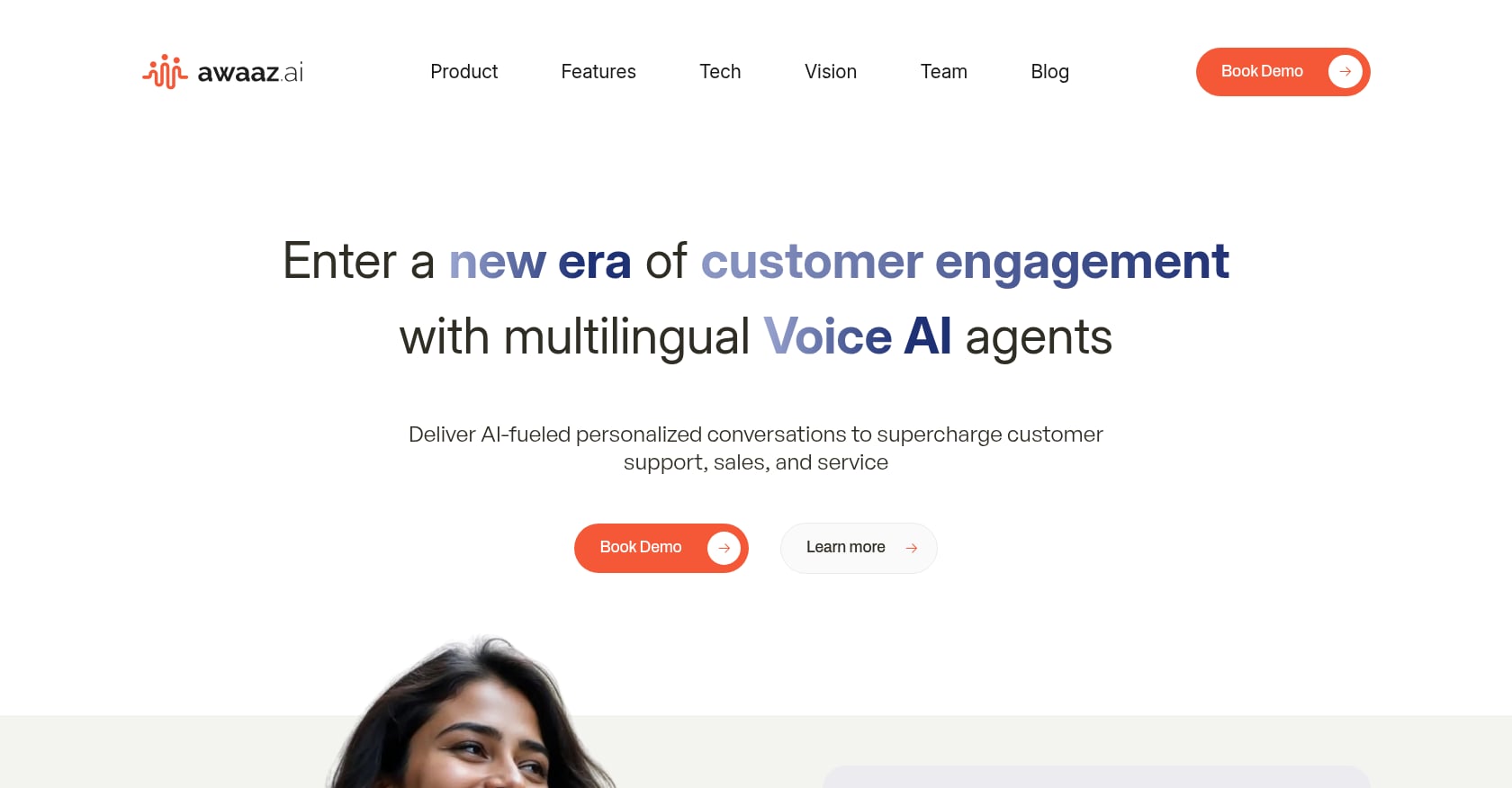
Best for: Banks, NBFCs, and fintechs needing multilingual outbound calling at scale in India
Pricing: Pay-per-use model with credits per minute of talk time. Four tiers available (Starter, Standard, Growth, Scale); demo required for specific quotes.
Key features:
- 24/7 AI voice agents across phone, SMS, and WhatsApp
- Support for 8+ languages with code-switching (including Hinglish)
- Domain-specific BFSI agents for sourcing, KYC, credit eligibility, collections, and retention
- In-house telephony stack supporting up to 10M calls per day
- Greater than 95% ASR/NLU accuracy with human-in-the-loop escalation
- CRM/CDP integrations with structured analytics from call data
- Click-to-scale deployment for fast pilots and rollouts
Why it stands out for AI sales prospecting:
Most tools on this list handle the “find the email, write the message” part of prospecting. Awaaz AI handles the part that actually closes deals in India: the phone conversation. For BFSI companies where loan sourcing, KYC verification, and credit eligibility calls drive the pipeline, this is where the conversion happens.
The platform has reached 3.8M unique customers in the last year, with an 82% call engagement rate. Clients include Axis Bank, L&T Finance, Ujjivan, Fullerton India, Equitas, and Dvara KGFS.
For deeper context on how voice AI delivers ROI in banking, the use cases extend well beyond cold outreach into collections, reactivation, and cross-sell.
Tradeoffs:
- Enterprise-sales-led motion; no self-serve free trial found
- Limited public documentation compared to developer-first platforms
- Best suited for India and vernacular markets, not a global B2B email prospecting tool
User sentiment: A self-identified Awaaz AI developer posted on Reddit in January 2025 discussing the tech stack and approximate $0.05/min pricing for SMBs. Community interest is present but formal third-party reviews are limited, which is typical for enterprise voice AI platforms selling into regulated industries.
2. Apollo.io
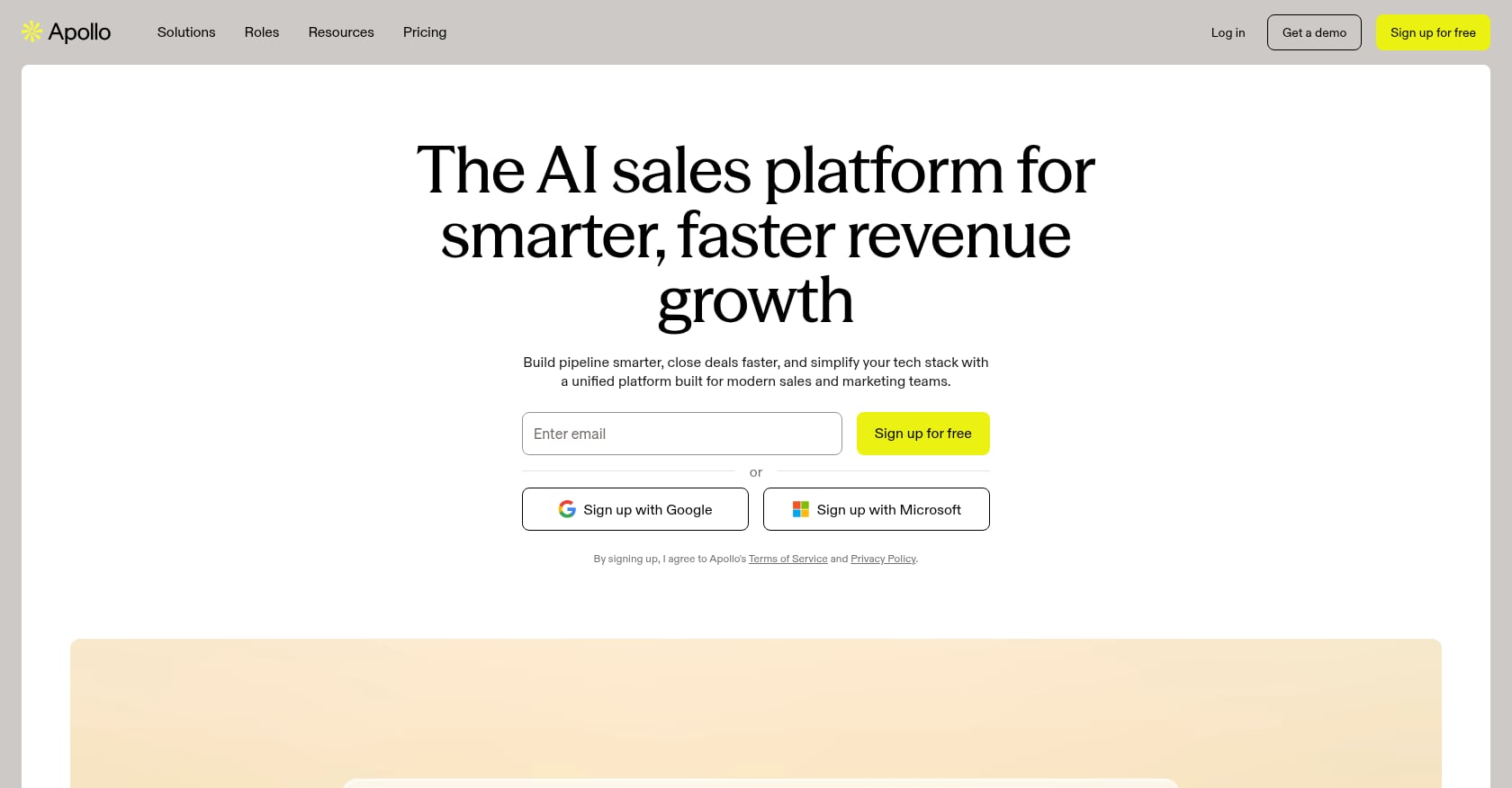
Best for: SDR teams needing a large B2B contact database with built-in email sequencing
Pricing: Free-forever plan with access to the full 210M+ contact database and basic search filters (5 mobile credits, 10 export credits per month). Basic plan at $49/user/month (annual) or $59 month-to-month.
Key features:
- 210M+ contacts with email and phone data
- Built-in email sequencing and call recording
- Intent signals and CRM sync
- Chrome extension for LinkedIn prospecting
Tradeoffs:
- Credit-based limits and feature gates mean actual costs often run 2-3x the advertised rate
- Western B2B database with limited coverage of Indian vernacular markets
- Data accuracy gaps reported by practitioners; requires verification workflows
User sentiment: Apollo consistently earns around 4.8/5 on G2. Practitioners on Reddit frequently recommend it as the best free starting point for AI prospecting, though many note the credit system feels restrictive once you scale beyond small campaigns.
3. Cognism
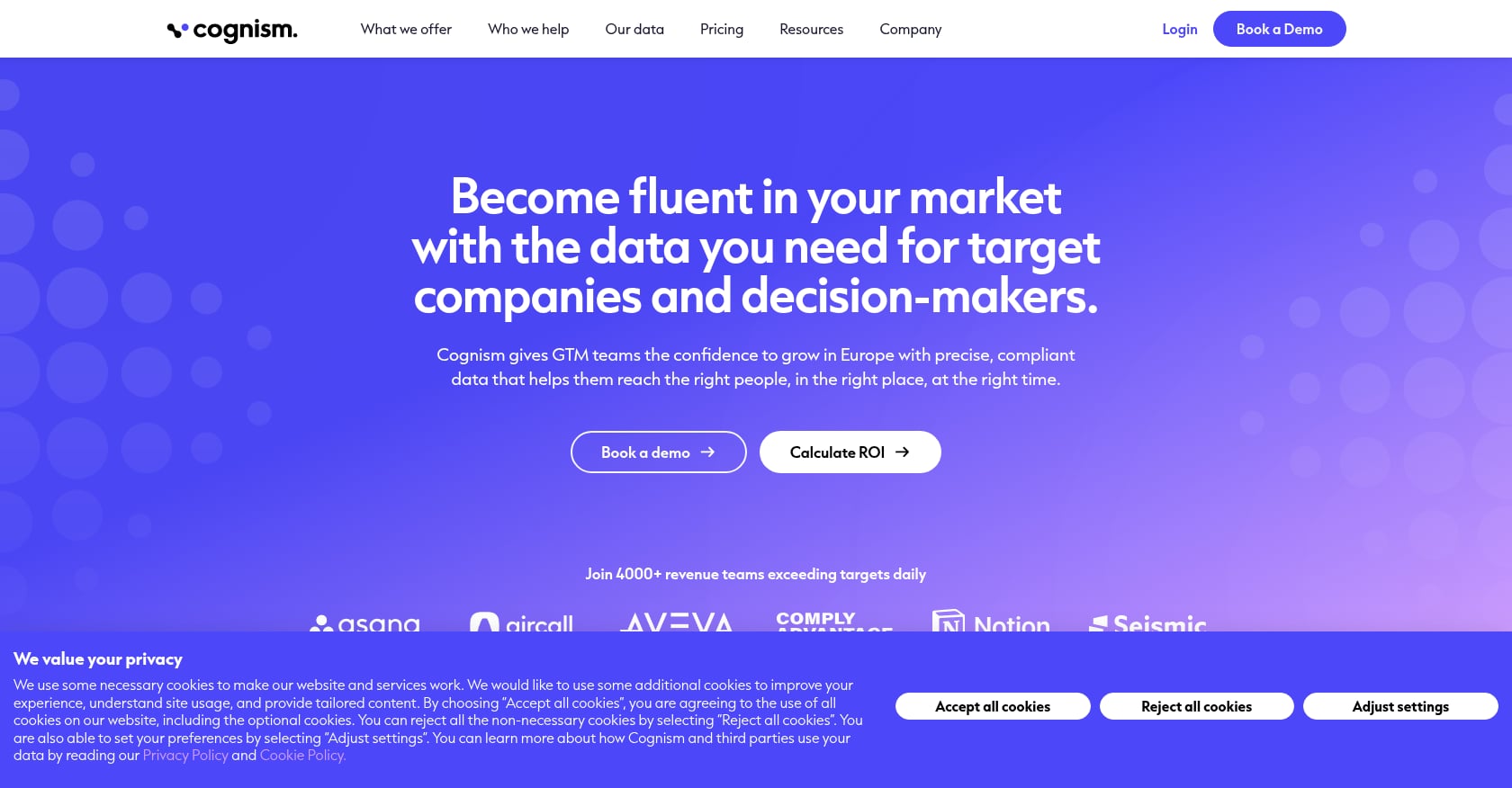
Best for: European and global B2B teams needing compliance-first contact data
Pricing: Starts around $15,000/year; enterprise contracts with custom terms.
Key features:
- DNC-cleaned phone numbers with GDPR compliance baked in
- Intent signals powered by Bombora
- AI-powered lead scoring
- Phone-verified mobile numbers (Diamond Data)
Cognism’s own research team notes that the three biggest benefits of AI prospecting are efficiency, better lead generation, and stronger engagement through personalized outreach, a framework that applies regardless of which tool you choose.
Tradeoffs:
- Premium pricing puts it out of reach for most SMBs
- Less relevant for India-focused BFSI prospecting
- Primarily email and phone data, not a voice AI or outreach platform
4. Instantly
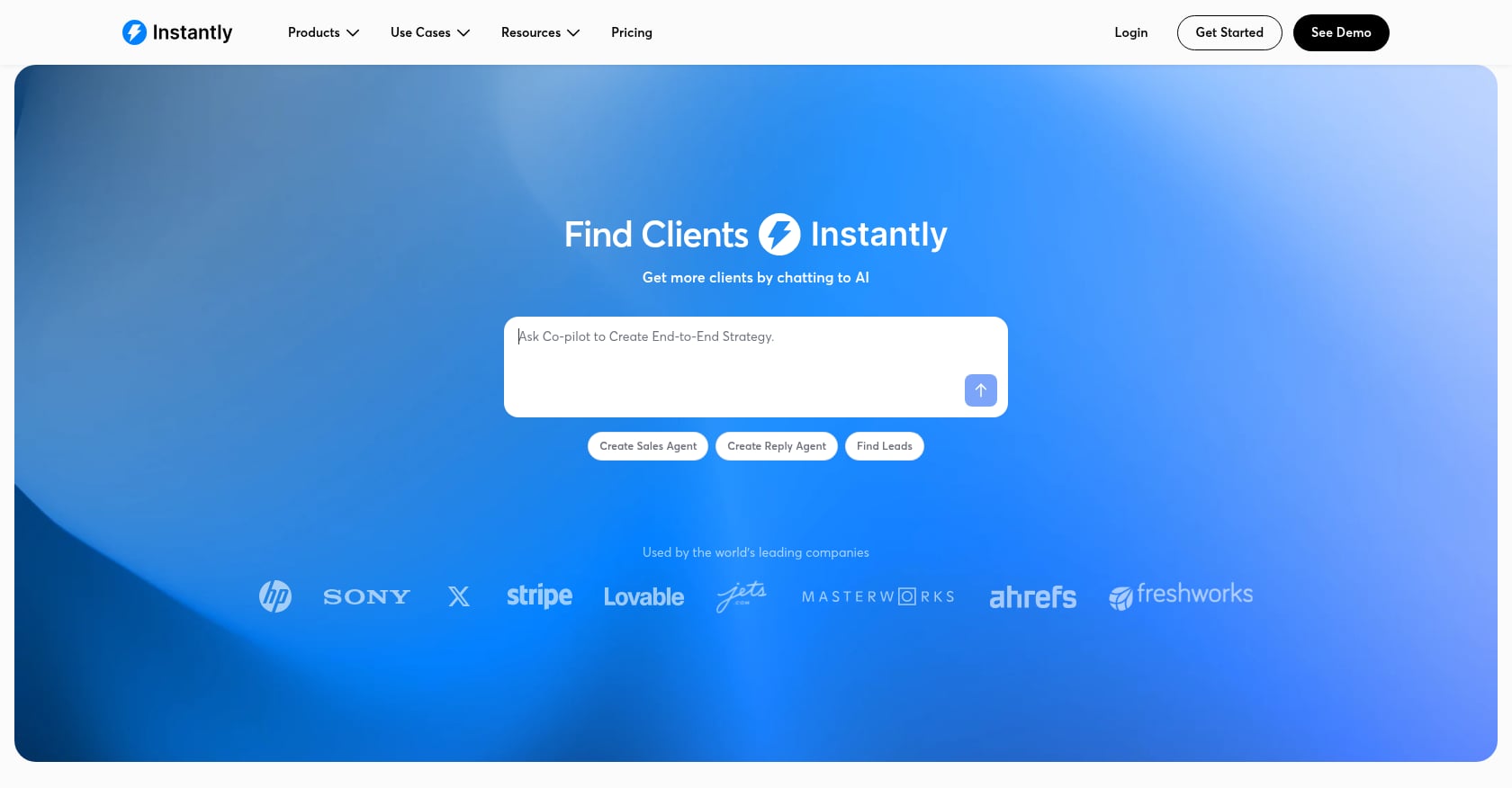
Best for: SDRs and agencies running high-volume cold email campaigns
Pricing: Growth plan starts at $37/month. SuperSearch (lead database) starts at $47/month. 14-day free trial available.
Key features:
- 450M+ B2B contacts
- Unlimited email accounts with built-in warmup
- Advanced deliverability tools and rotation
- AI personalization for email copy
Tradeoffs:
- Email-only; no voice or WhatsApp channel
- No multilingual or vernacular support for Indian markets
- Deliverability depends heavily on domain setup and warmup discipline
User sentiment: With 4.8/5 from over 3,800 G2 reviews, Instantly is one of the most popular email-focused AI sales prospecting tools. Practitioners on forums praise its simplicity but warn that results drop fast without proper technical setup.
5. Amplemarket Duo
Best for: Mid-market to enterprise sales teams wanting AI-assisted (not fully autonomous) outbound
Pricing: $2,880 to $3,960 per user per year with annual billing, depending on team size.
Key features:
- Three specialized AI agents: Signal, Research, and Sequence
- 7-channel engagement including email, LinkedIn, and phone
- AI voice cloning for voicemail drops
- Deliverability suite with email warmup
- Human-in-the-loop approval before messages send
Amplemarket’s approach reflects a growing consensus: the most effective AI prospecting systems keep a human in the loop rather than running fully autonomously. As one user quoted by Amplemarket put it, “The platform feels like having an extra sales team member who never sleeps.”
Tradeoffs:
- No deal management capabilities; lives upstream of CRM
- Annual contract required
- Not fully autonomous by design (which is actually a feature, not a bug)
- Western B2B focus with no vernacular language support
6. Clay
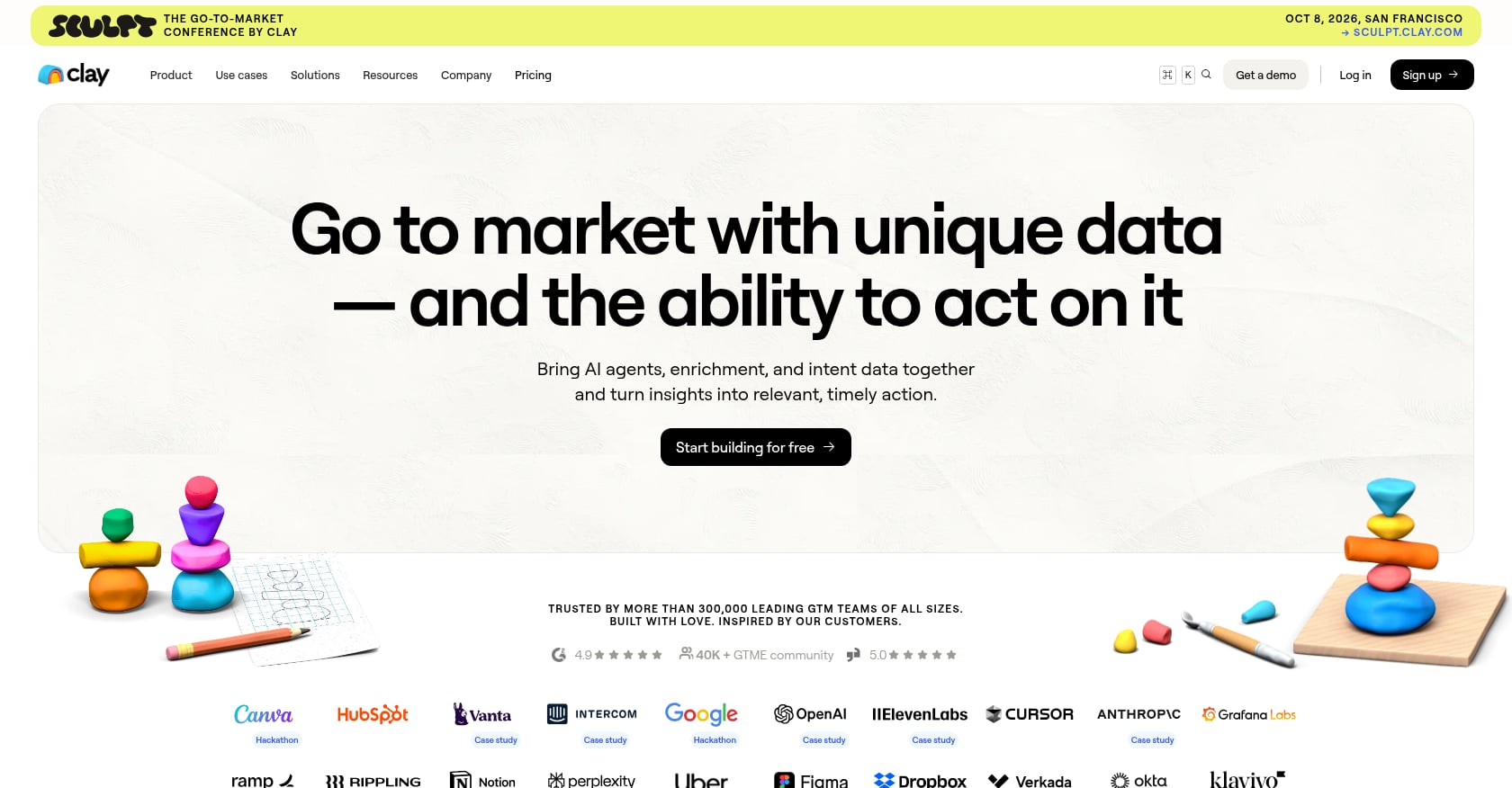
Best for: RevOps and GTM engineers building complex data enrichment workflows
Pricing: Starts at $134/month. Free plan available with 1,200 annual credits.
Key features:
- 75-100+ data providers aggregated in one interface
- Claygent AI research agent for custom prospect research
- Spreadsheet-like UI for building logic flows and waterfalls
- Integrates with virtually every outbound tool
Clay occupies a unique position in the AI sales prospecting stack. It doesn’t send emails or make calls. Instead, it makes every other tool better by ensuring you’re reaching the right person with the right context.
Tradeoffs:
- Steep learning curve; not plug-and-play
- Premium pricing that adds to your existing tool costs
- Requires separate sending infrastructure for actual outreach
- No voice or phone channel capabilities
User sentiment: G2 rating of 4.8/5 from 207 reviews. Practitioners on Reddit describe Clay as “the Swiss army knife of enrichment” but consistently warn that it takes weeks to build effective workflows.
7. Gong
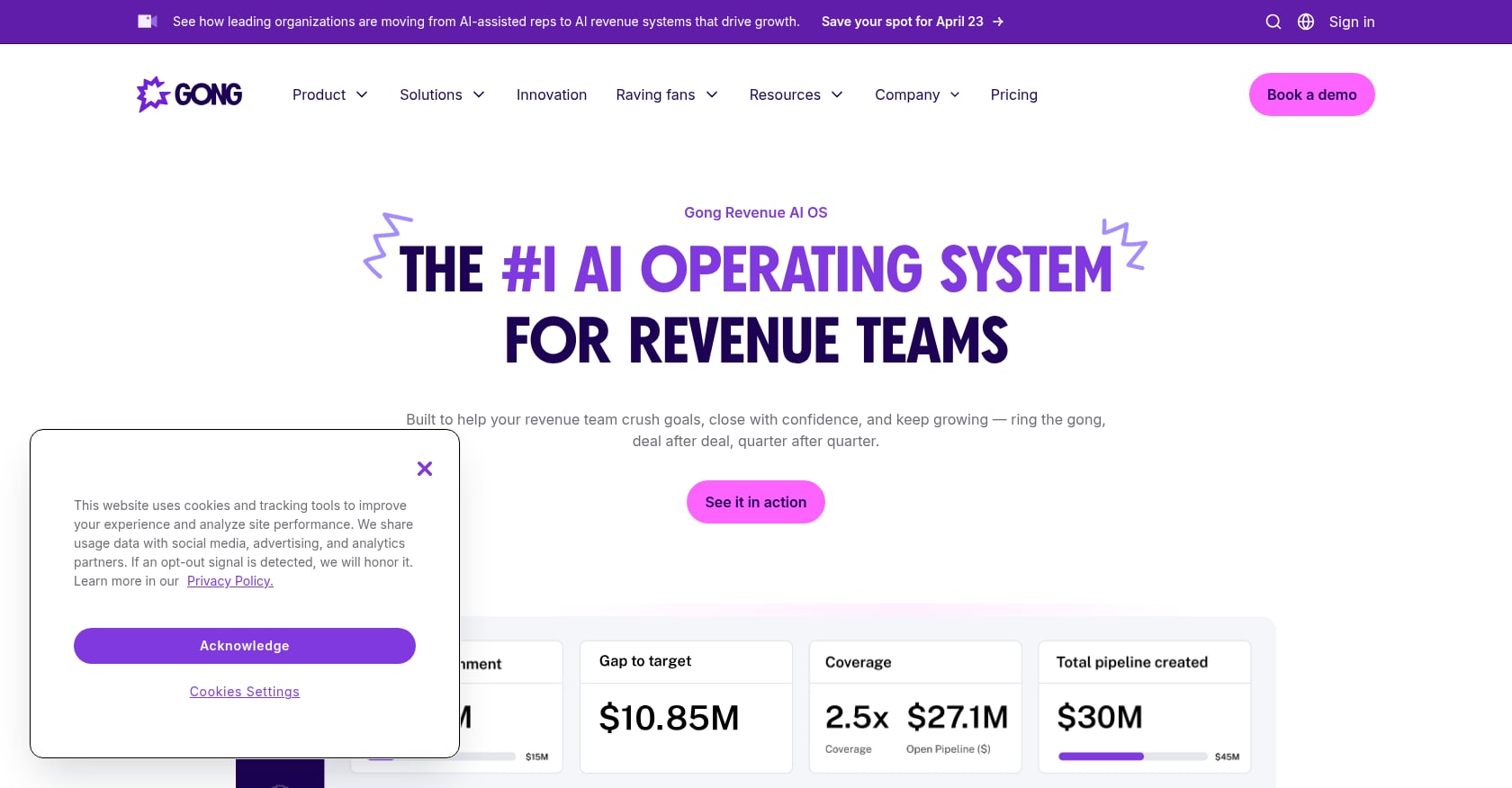
Best for: Sales teams wanting AI-driven coaching from call and email analysis
Pricing: $1,600 per user per year for Gong Foundations, plus a $50,000 annual platform fee.
Key features:
- Conversation analytics across calls, emails, and video meetings
- AI-powered coaching insights with talk-to-listen ratios, topic tracking
- Deal intelligence and pipeline management
- Forecasting based on actual conversation signals
Gong is technically a conversation intelligence tool rather than a prospecting platform, but it earns a spot here because it closes the feedback loop. When you know which prospecting messages and call scripts actually convert, you can tune your AI prospecting approach accordingly.
Tradeoffs:
- Very expensive entry point ($50K platform fee is a barrier for most teams)
- Focuses on analyzing conversations, not generating prospects
- Better suited for mid-to-late funnel optimization than top-of-funnel prospecting
- No outbound capabilities
8. Artisan (Ava)
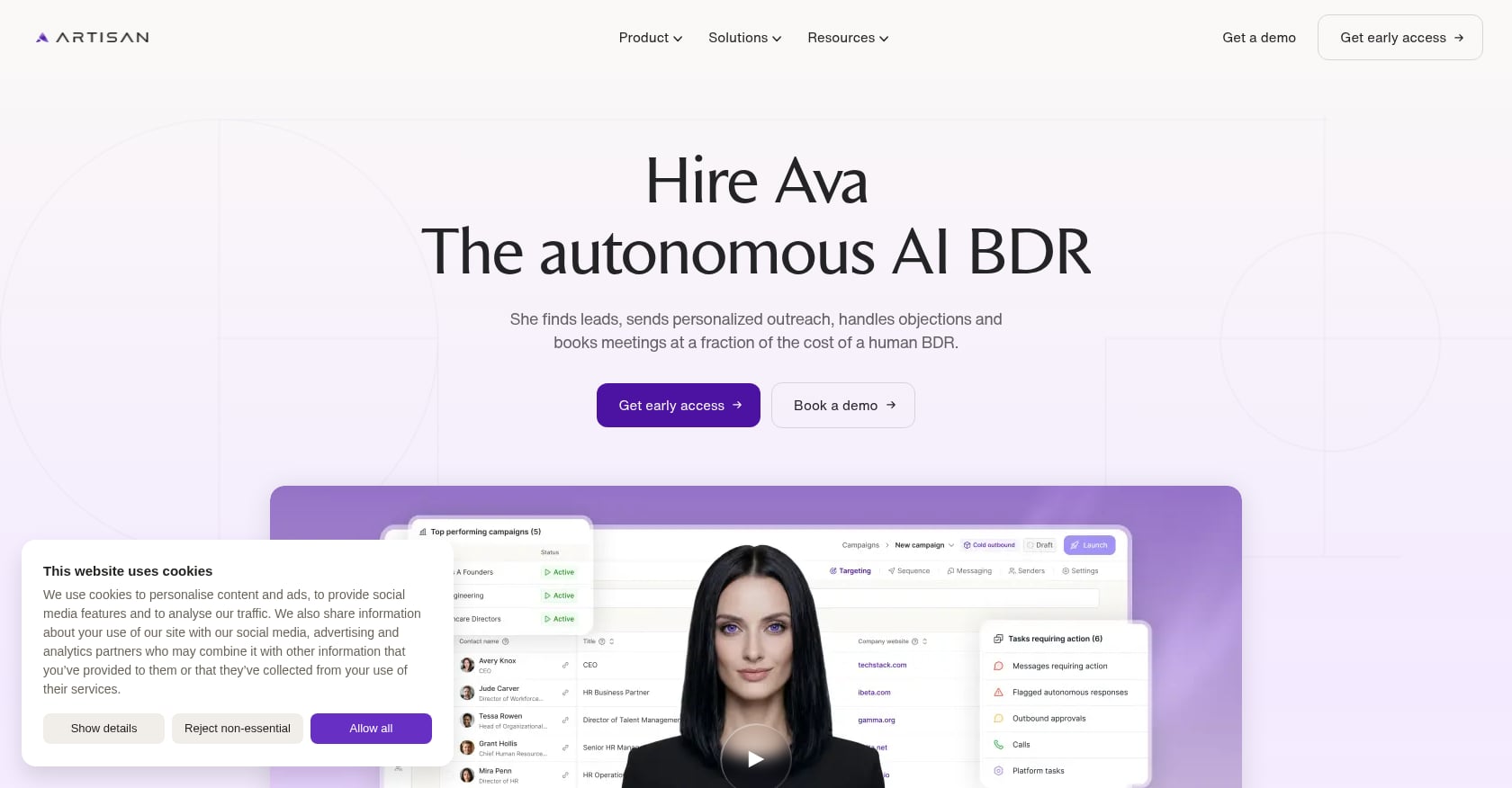
Best for: Teams that want to fully replace human SDRs with an autonomous AI agent
Pricing: Custom pricing; typically starts around $2,000/month.
Key features:
- 300M contact database
- AI email writing with autonomous outreach
- Persona configuration for different ICPs
- End-to-end campaign management without human intervention
Tradeoffs:
- G2 rating of 3.8/5 from 89 reviews, the lowest among the platforms reviewed here
- Multiple reviewers report that Ava’s output at high volume tends toward generic, template-like messaging
- LinkedIn reportedly restricted Artisan’s automated outreach at the start of 2026
- No deliverability tools built in
- No voice channel
User sentiment: The autonomous AI SDR category is where the highest churn rates live. One practitioner shared that an AI SDR sent “14 nearly identical demo invites to the same VP of Marketing” within two days due to thread-handling failures. Artisan represents the boldest bet in AI sales prospecting, but the data suggests most teams aren’t ready for full autonomy yet.
9. Seamless.AI
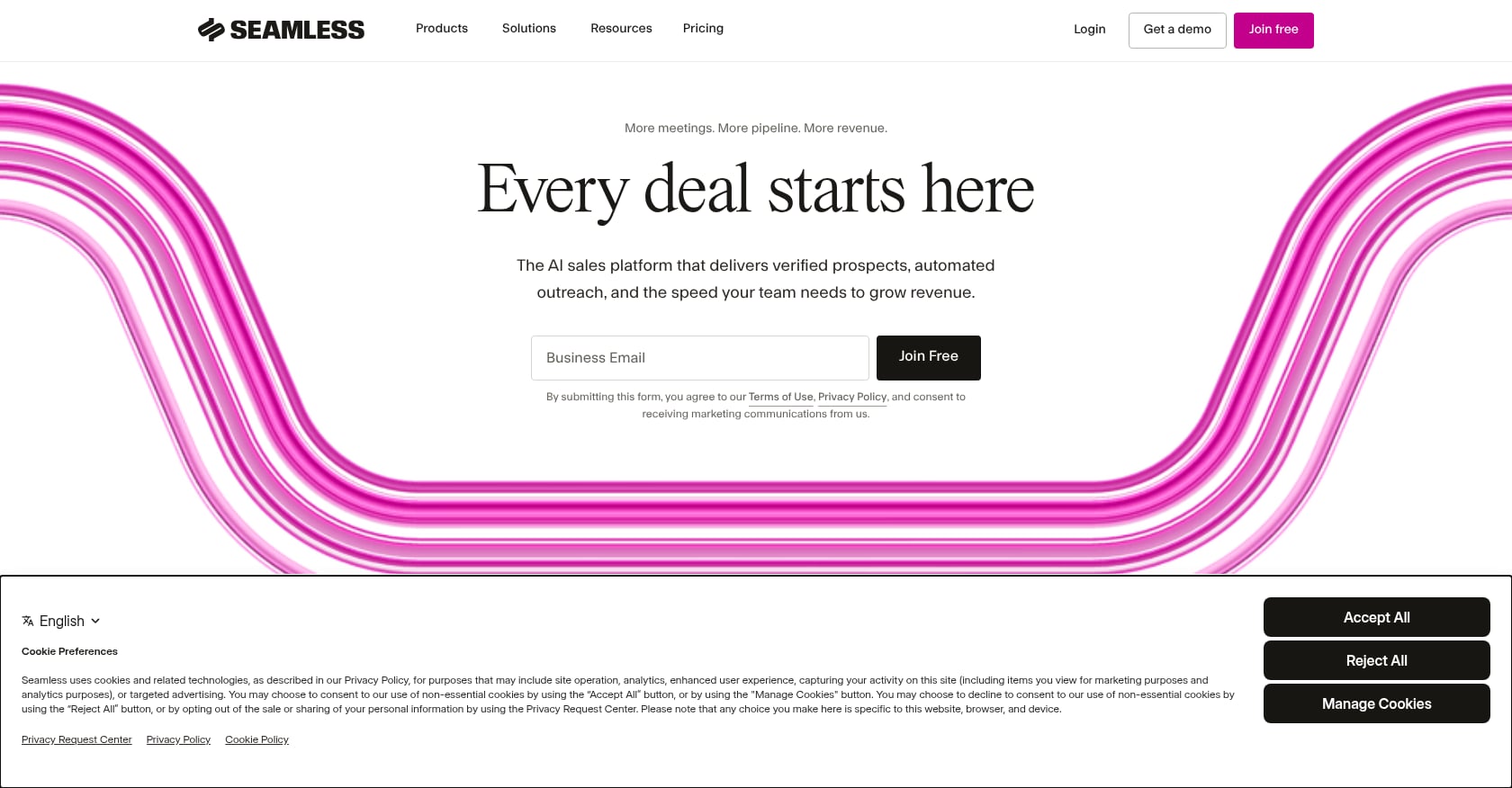
Best for: Sales teams needing real-time verified contact data for phone and email outreach
Pricing: Free plan with 50 lifetime credits. Pro plan reportedly around $99/user/month.
Key features:
- 1.3B business contacts with real-time verification
- Chrome extension for LinkedIn prospecting
- Buyer intent data
- Direct integration with major CRMs
Tradeoffs:
- Contact discovery only, no email sequencing or outreach built in
- Western B2B database; limited coverage outside North America and Europe
- Credit system can feel restrictive for high-volume teams
How to Choose the Right AI Sales Prospecting Tool
The comparison table above gives you the features. Here’s how to actually decide.
Start with your primary channel. If your prospects pick up the phone (common in Indian BFSI, insurance, lending), voice AI prospecting tools will outperform email platforms by a wide margin. If your buyers live in their inbox, email-first tools like Instantly or Apollo make more sense. For a deeper comparison of outbound calling bot platforms, the differences in telephony infrastructure and language support matter more than most buyers realize.
Consider your market. Global English-speaking B2B? Apollo, Cognism, and Clay are strong foundations. India and vernacular markets? You need tools built for multilingual conversational AI, including code-switching support, WhatsApp integration, and local telephony optimization. The Indian sales environment requires a fundamentally different prospecting stack.
Match your autonomy preference. The data is clear on this one: human-in-the-loop systems consistently outperform fully autonomous AI SDRs. Organizations using signal-qualified leads report 47% better conversion rates and 43% larger deal sizes. Signal-based selling, where AI acts on real-time buyer signals like EMI due dates, credit eligibility changes, or loan application stages, beats generic list-blasting every time.
Budget honestly. A $37/month email tool with poor deliverability costs more than a $2,000/month platform that books meetings. Calculate cost per minute and cost per qualified meeting, not just sticker price.
Common Mistakes When Adopting AI Sales Prospecting
The 70-80% churn rate on AI SDR tools isn’t random. The same failure patterns show up repeatedly.
Treating AI as set-and-forget. The SalesBread prospecting guide makes a point that experienced practitioners consistently echo: AI is best used for account research and qualification, not message generation. AI that identifies the right targets outperforms AI that writes clever emails. Letting an AI agent blast thousands of generic messages without oversight is the fastest way to burn your domain and your brand.
Ignoring data quality. Bad data in, bad outreach out. Multiple practitioners report AI tools sending messages to the wrong person, the wrong company, or using outdated information. Every AI prospecting tool is only as good as the data feeding it.
Skipping guardrails. Without clear rules about send frequency, follow-up cadence, and escalation triggers, AI agents can go off the rails. The “14 demo invites to the same VP” story is extreme but not unusual.
Neglecting deliverability. For email tools, domain warmup, authentication (SPF, DKIM, DMARC), and sender reputation management aren’t optional. For voice AI, call pickup rates and contact center infrastructure determine whether your AI agent ever reaches a live person.
Picking the wrong channel for your market. This might be the most expensive mistake. Running cold email campaigns to reach NBFC customers in tier-2 Indian cities is like bringing a knife to a gunfight. Phone-first markets need phone-first tools.
The Voice AI Advantage for Indian Markets
Here’s the gap that most AI sales prospecting guides completely ignore.
The Indian Voice AI market was valued at $153 million in 2024 and is projected to reach $957 million by 2030, growing at 35.7% CAGR. That growth is being driven by a specific reality: in India, phone calls and WhatsApp are how business gets done, especially in financial services.
Consider the bottleneck. Indian sales reps spend only 27% of their time on actual selling. The rest goes to research, data entry, follow-ups, and administrative tasks. Only 8% are confident they’ll meet 100% of their targets. Meanwhile, 50% of sales time is lost on unproductive prospecting.
Voice AI prospecting solves this at the source. Instead of making reps manually dial hundreds of numbers, AI agents handle the initial qualification call in the prospect’s preferred language, including mixed-language conversations like Hinglish, and pass warm leads to human reps. The result is what the data predicts: AI-personalized calls achieve 36% higher meeting conversion rates compared to generic outreach, with one case study showing a 42% reduction in cost per lead.
For banks, NBFCs, and fintechs operating across India, the “signals” that drive effective prospecting are different from Western B2B. They’re EMI due dates, credit eligibility changes, loan application stages, and payment behavior patterns. Voice AI agents that act on these signals, calling the right person at the right time in the right language, represent India’s version of signal-based selling.
If you’re evaluating AI voice solutions for Indian call centers, the key differentiators are language coverage, telephony infrastructure, and domain-specific NLU, not just generic conversation ability.
For BFSI decision-makers ready to evaluate a voice AI prospecting solution, this procurement guide for small finance banks walks through the vendor selection process step by step.
FAQ
Is AI sales prospecting worth the investment?
The data says yes, with caveats. Sales teams using AI are 83% more likely to report revenue growth compared to 66% of teams without it. Signal-personalized outreach achieves 15-25% reply rates versus 3-5% for generic cold email, a 5x improvement. McKinsey reports early adopters see 10-15% efficiency gains. But those numbers only apply to teams that choose the right tool category for their market and maintain human oversight. The 70-80% churn rate on AI SDR platforms is a real warning.
Can AI fully replace human SDRs?
Not yet. The AI SDR market is projected to reach $15 billion by 2030, and 22% of teams have already replaced human SDRs. But the platforms with the highest user satisfaction (Amplemarket, Awaaz AI) all use human-in-the-loop models. Fully autonomous tools like Artisan have the lowest G2 ratings in the category. The winning formula right now is AI handling the volume and qualification while humans handle the judgment and relationship-building.
What’s the best AI sales prospecting tool for India?
For Indian markets, especially BFSI, voice AI with vernacular language support is the strongest fit. Phone calls and WhatsApp remain the dominant sales channels. Global email-centric tools like Apollo or Instantly have limited Indian contact databases and zero support for languages like Hindi, Tamil, or Hinglish code-switching. Awaaz AI is purpose-built for this environment, with 8+ languages and an in-house telephony stack. Book a demo to see it in action.
How much do AI prospecting tools cost?
Prices range dramatically. Email tools start as low as $37/month (Instantly) or free (Apollo). Data enrichment platforms run $134/month and up (Clay). Enterprise platforms like Cognism start around $15,000/year, and Gong’s platform fee alone is $50,000/year. Voice AI platforms like Awaaz AI use pay-per-minute models, which align costs directly to usage. The real question isn’t sticker price but cost per qualified meeting or cost per conversion.
What’s the difference between an AI SDR and a voice AI agent?
An AI SDR typically automates email and LinkedIn outreach: finding contacts, writing messages, and managing sequences. A voice AI agent conducts actual phone conversations, qualifying leads, collecting information, and routing warm prospects to human reps. In phone-first markets, voice AI handles the channel where deals actually close. The two can complement each other, but they solve different problems in the prospecting funnel.
How do I avoid AI prospecting failures?
Start with three principles. First, use AI for research and qualification rather than trusting it to write all your messaging from scratch. Second, always maintain human review, especially in the first 90 days when the system is learning your market. Third, invest in data quality before you invest in AI tools. The most common failure mode is good AI working with bad data.
Does AI sales prospecting work for regulated industries like banking?
Yes, but the tool needs to be built for it. Generic email SDR platforms have no awareness of regulatory constraints like RBI guidelines, DNC compliance, or DPDP requirements. Voice AI platforms designed for BFSI, like Awaaz AI, build compliance into the workflow with call recording, audit trails, and structured data handling. For a full breakdown, see this guide on customer experience in banking.
What results should I expect in the first 90 days?
Set realistic expectations. 64% of reps using AI save 1-5 hours per week on prospecting tasks. For voice AI in BFSI, practitioners report engagement rates above 80% and meaningful improvements in qualified meeting volume within the first quarter. But the first month is typically about tuning: refining scripts, improving data inputs, and calibrating when the AI escalates to a human. The organizations that succeed are the ones that treat the first 90 days as a pilot, not a magic switch.