
TL;DR
Not all AI virtual receptionists qualify leads equally. The best platforms go beyond answering calls: they score intent in real time, sync data bidirectionally with your CRM, handle multilingual conversations without breaking, and escalate edge cases to humans. This guide compares 10 platforms across pricing, languages, CRM depth, and lead qualification capabilities, covering both global and India-focused options. If you operate in BFSI or fintech in India, Awaaz AI is the strongest pick for domain-specific qualification at scale.
Why Your AI Receptionist Needs to Do More Than Pick Up the Phone
Here’s a number that should bother every sales team: 67% of lost sales result from inadequate lead qualification. Not bad products, not weak marketing. Just poor qualification.
And here’s the flip side: businesses that respond to inbound leads within one minute see up to 400% higher conversion rates. A full-time human receptionist costs $35,000 to $45,000 a year in the US alone, and they still can’t work at 3 AM on a Saturday. That gap between when a lead calls and when someone qualifies them is where revenue disappears.
This is exactly why the market for AI virtual receptionists with top lead qualification features is expanding fast. The global voice AI agents market is projected to reach $47.5 billion by 2034, up from $2.4 billion in 2024, growing at 34.8% annually. But growth alone doesn’t help you pick the right tool.
Most comparison articles list 20 or 25 platforms with copy-paste feature descriptions and no honest tradeoffs. This guide takes a different approach. It covers 10 platforms, evaluated specifically on how well they qualify leads, with real pricing, limitations, and practitioner feedback from communities like Reddit and G2. It also bridges a gap no other comparison addresses: global platforms alongside India-native voice AI built for BFSI and vernacular markets.
Whether you run a law firm in Texas or a microfinance operation in Tamil Nadu, the question is the same: which AI receptionist will turn inbound calls into qualified pipeline? For a broader look at how conversational AI fits into contact center strategy, that’s worth reading alongside this comparison.
What Makes Lead Qualification Features “Top-Tier”?
Every AI receptionist can capture a name and phone number. That’s table stakes. The difference between basic call answering and genuine lead qualification comes down to six capabilities.
1. Real-time intent detection and lead scoring. The system needs to assess caller intent during the conversation, not after. A top-tier receptionist assigns a lead score based on what the caller says, their tone, and their responses to qualifying questions, then routes accordingly.
2. Domain-specific qualification logic. A dental practice and a small finance bank have completely different qualification criteria. For BFSI, that means credit eligibility screening, KYC verification, and EMI follow-up. For legal, it means conflict checks and case intake. Generic “name, email, budget” scripts don’t cut it.
3. Bidirectional CRM sync. Logging call data into your CRM is the bare minimum. Advanced platforms pull existing customer data into the conversation in real time, so the AI knows whether it’s talking to a first-time caller or a returning customer with an open support ticket.
4. Multilingual and vernacular handling. In India, where most consumers code-switch between languages mid-sentence (Hinglish being the most common example), a receptionist that only understands English will fail to qualify a large share of callers. This isn’t a nice-to-have in multilingual markets. It directly affects conversion.
5. Low-latency conversation (sub-800ms response time). Practitioners on Reddit consistently flag latency as the top deal-breaker. When an AI agent pauses for over a second between turns, callers lose trust, interrupt, or hang up. One tester reported that Retell AI averaged 1.1-second pauses on multi-turn conversations, causing frequent caller interruptions. For lead qualification, every awkward silence is a potential lost deal.
6. Human-in-the-loop escalation. AI works well for structured qualification flows. One user in r/b2bmarketing put it plainly: AI calling “works for super simple, transactional stuff like appointment booking or basic info gathering. But the second someone asks a curveball question, it falls apart.” The best systems detect when a conversation exceeds the AI’s competence and route to a live agent seamlessly.
Research backs this up. AI improves qualification accuracy by 40% and qualification speed by 3x, but only when these features work together. A fast, multilingual AI that can’t sync with your CRM is just a sophisticated answering machine.
Quick-Glance Comparison Table
| Platform | Best For | Starting Price | Languages | Lead Qual Level | India Focus |
|---|---|---|---|---|---|
| Awaaz AI | BFSI/Fintech in India | Pay-per-use (credits/min) | 8+ Indian + Hinglish | Advanced (domain-specific) | ✅ Primary |
| CloudTalk | Scaling SMBs globally | $19/user/mo + $350/mo AI | 60+ | Advanced (CRM-driven) | ❌ |
| Smith.ai | Legal/Finance (US) | $95/mo AI-only | English + Spanish | Advanced (hybrid AI+human) | ❌ |
| Gnani.ai | Enterprise BFSI India | Custom/enterprise | 20+ Indian languages | Advanced (agentic AI) | ✅ |
| Retell AI | Developer-first builds | $0.07-0.31/min | Multilingual | Moderate (customizable) | ❌ |
| Nextiva (XBert) | Small business 24/7 | $15/user/mo + $99/mo AI | English primary | Moderate | ❌ |
| My AI Front Desk | Affordable multi-language SMBs | $79/mo | Multiple | Basic-Moderate | ❌ |
| Dialpad | Sales coaching + qualification | $15/user/mo | Multiple | Moderate-Advanced | ❌ |
| Ringg.ai | Indian language calling | $0.06-0.10/min | 8+ Indian languages | Moderate | ✅ |
| Rosie AI | Solopreneurs on a budget | $41/mo | English | Basic | ❌ |
10 Best AI Virtual Receptionists with Top Lead Qualification Features
1. Awaaz AI
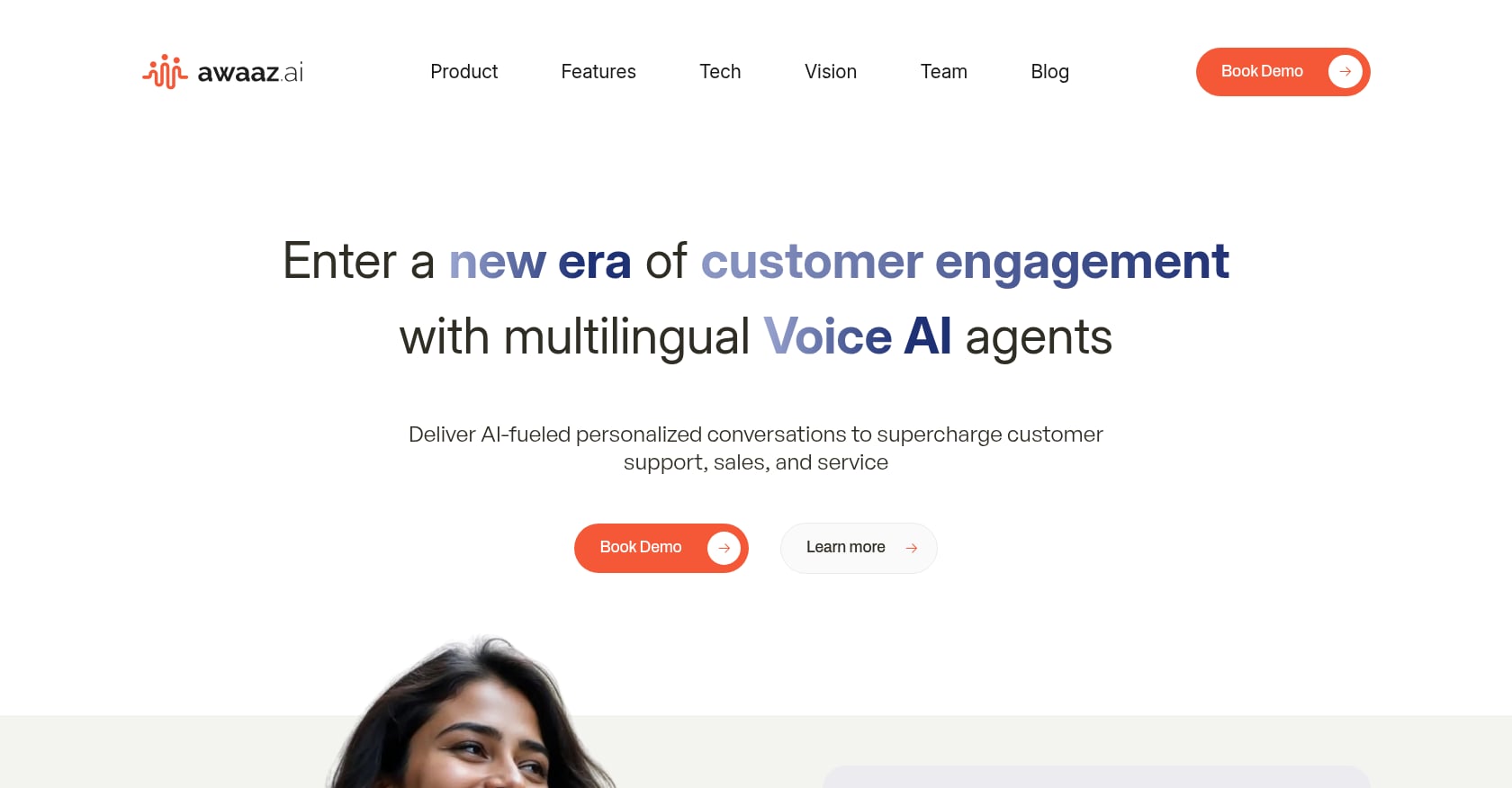
Best for: BFSI and fintech organizations in India needing multilingual, domain-specific lead qualification at scale.
Pricing: Pay-per-use model based on credits per minute of talk time. Demo available; specific pricing requires a consultation.
Key lead qualification features:
- Domain-specific AI agents with finance-first templates covering sourcing, KYC, credit eligibility, collections, and retention. These aren’t generic scripts, they’re built for the workflows BFSI buyers actually run.
- Multilingual support across 8+ Indian languages including mixed-language (Hinglish) conversations. In a country where code-switching is standard, this is a conversion driver.
- Voice-first omnichannel qualification across phone, SMS, and WhatsApp in a single workflow. Most competitors treat these as separate channels.
- Greater than 95% ASR/NLU accuracy (claimed) with human-in-the-loop safeguards for edge cases.
- Low-latency conversations through a proprietary in-house telephony stack, meaning fewer of those trust-killing pauses during qualification calls.
- Reporting and analytics that convert millions of calls into structured, queryable data for portfolio-level decisioning.
- CRM/CDP integrations via APIs for automated data sync and escalations.
Proof points: 3.8M unique customers in the last year, 82% call engagement rate, 60% cost reduction, 2x conversions. Client logos include Axis Bank, L&T Finance, Ujjivan, Fullerton India, and Equitas.
Limitations:
- Enterprise sales-led, meaning no self-serve signup. You’ll need to book a demo.
- Limited public documentation compared to developer-first platforms.
- Pricing transparency requires a direct conversation.
Why it tops this list: No other AI virtual receptionist with top lead qualification features combines finance-specific qualification templates, vernacular code-switching support, and a proprietary low-latency telephony stack built for Indian markets. If you’re a bank, NBFC, or MFI qualifying leads across Tier-2 and Tier-3 cities, this platform was built for your exact use case. For a deeper look at how small finance banks procure Awaaz AI, there’s a dedicated procurement guide. And for a broader perspective on voice AI in banking, including ROI frameworks, that’s worth reading too.
2. CloudTalk
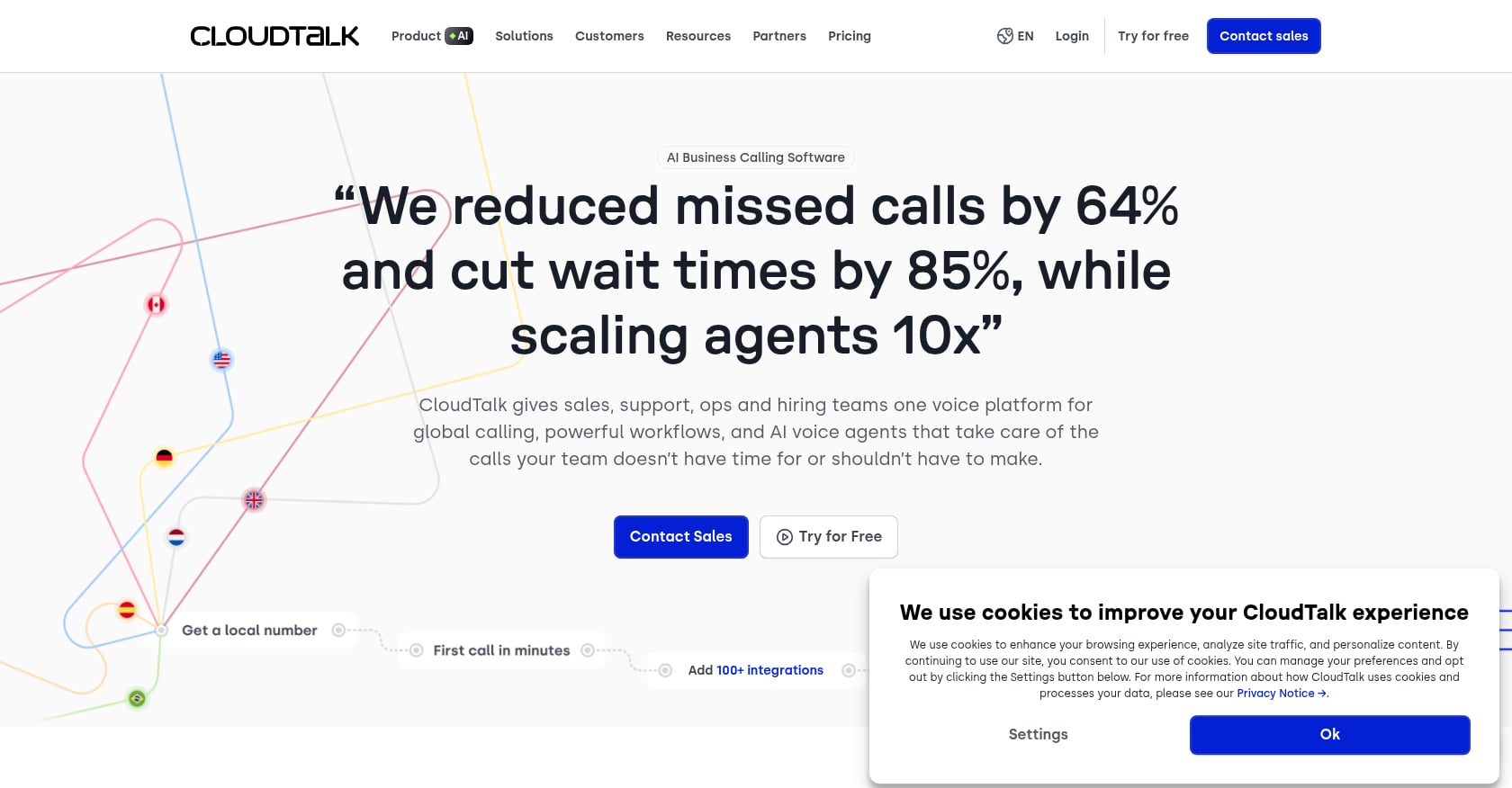
Best for: Fast-growing sales teams globally that need CRM-centric lead qualification with deep integrations.
Pricing: $19/user/month for the platform, plus $350/month for the AI receptionist add-on (includes 1,000 minutes). Alternatively, $0.25/min for AI answering on a usage basis.
Key lead qualification features:
- Smart lead scoring and triage powered by conversation analysis
- 60+ languages supported
- Native bidirectional CRM sync with HubSpot, Salesforce, and Pipedrive
- Intelligent call transfers based on lead score and intent
- Conversation intelligence add-on for deeper qualification analytics
User sentiment: G2 rating of 4.4/5 across 1,600+ reviews. A published case study shows Circle Gym went from 5% to double-digit booking conversions after implementation.
Limitations:
- CRM integrations require the Essential plan or higher.
- Conversation intelligence costs extra.
- No India or vernacular language focus. If your callers code-switch between Hindi and English, CloudTalk won’t keep up.
Verdict: The strongest all-around option for Western markets. Particularly well-suited for SaaS, e-commerce, and professional services teams already invested in Salesforce or HubSpot.
3. Smith.ai
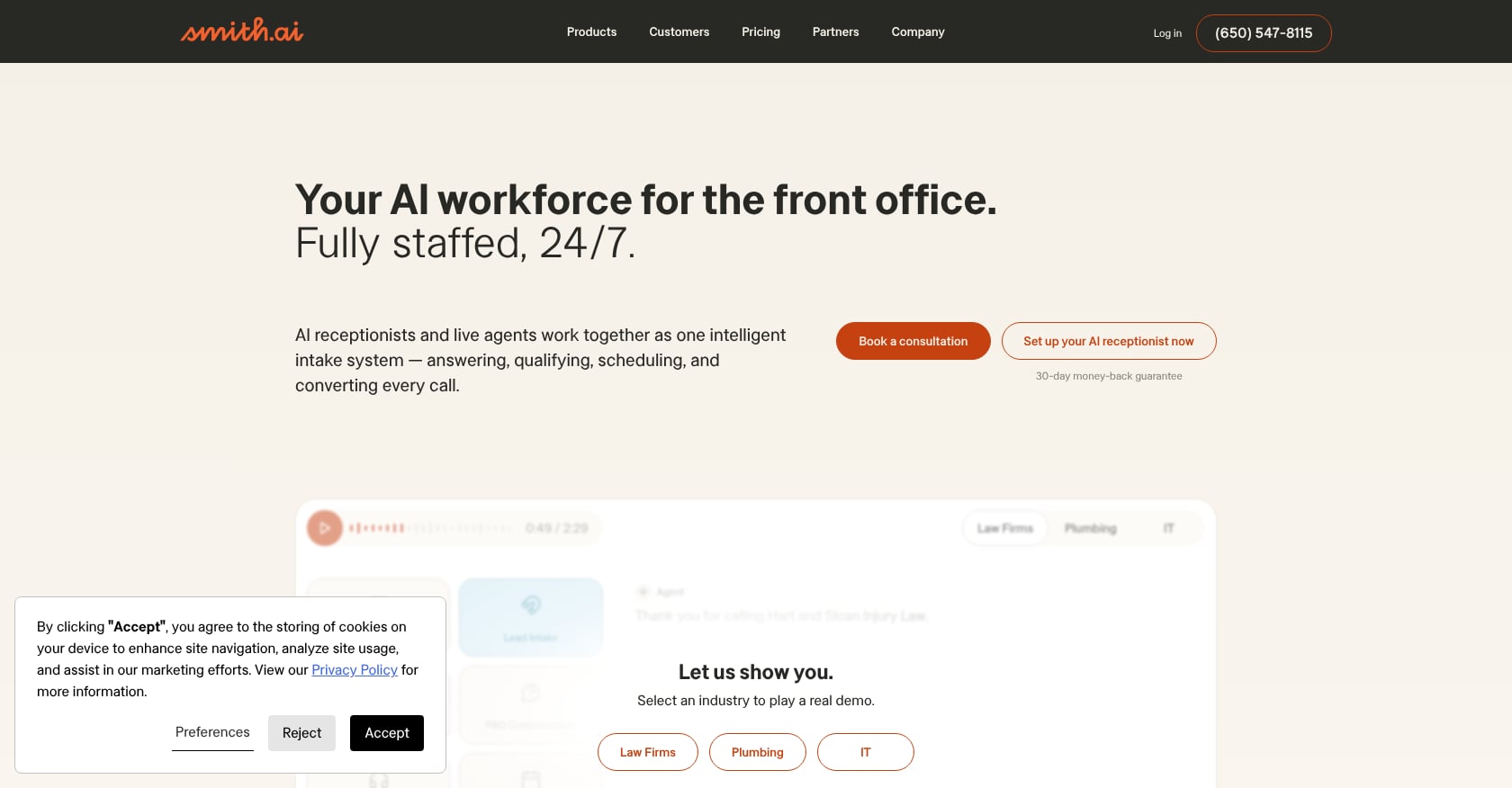
Best for: High-ticket professional services (legal, financial advisory) wanting hybrid AI with human backup.
Pricing: $95/month for AI-only, $255/month for 30 calls with hybrid AI-to-human handoff, $510/month for 60 calls, $1,275/month for 120 calls. Overage at $8.50 per call.
Key lead qualification features:
- Hybrid model where AI handles initial qualification, then routes complex scenarios to live receptionists
- Specialized intake flows for legal (conflict checks), medical, and financial services
- Bilingual in English and Spanish
- Payment collection capability during calls
- CRM integrations with HubSpot, Clio, and other industry tools
User sentiment: G2 rating of 4.9/5 across 70+ reviews. Users consistently praise quality but flag cost at volume.
Limitations:
- Per-call pricing gets expensive fast for high-volume operations. At 200+ calls per month, you’re well over $2,000.
- Only English and Spanish. Not viable for multilingual markets.
- No presence in India or APAC.
Verdict: If you bill $400/hour and a single qualified lead covers the monthly cost, Smith.ai’s hybrid model makes financial sense. For volume-driven businesses, it’s too expensive.
4. Gnani.ai
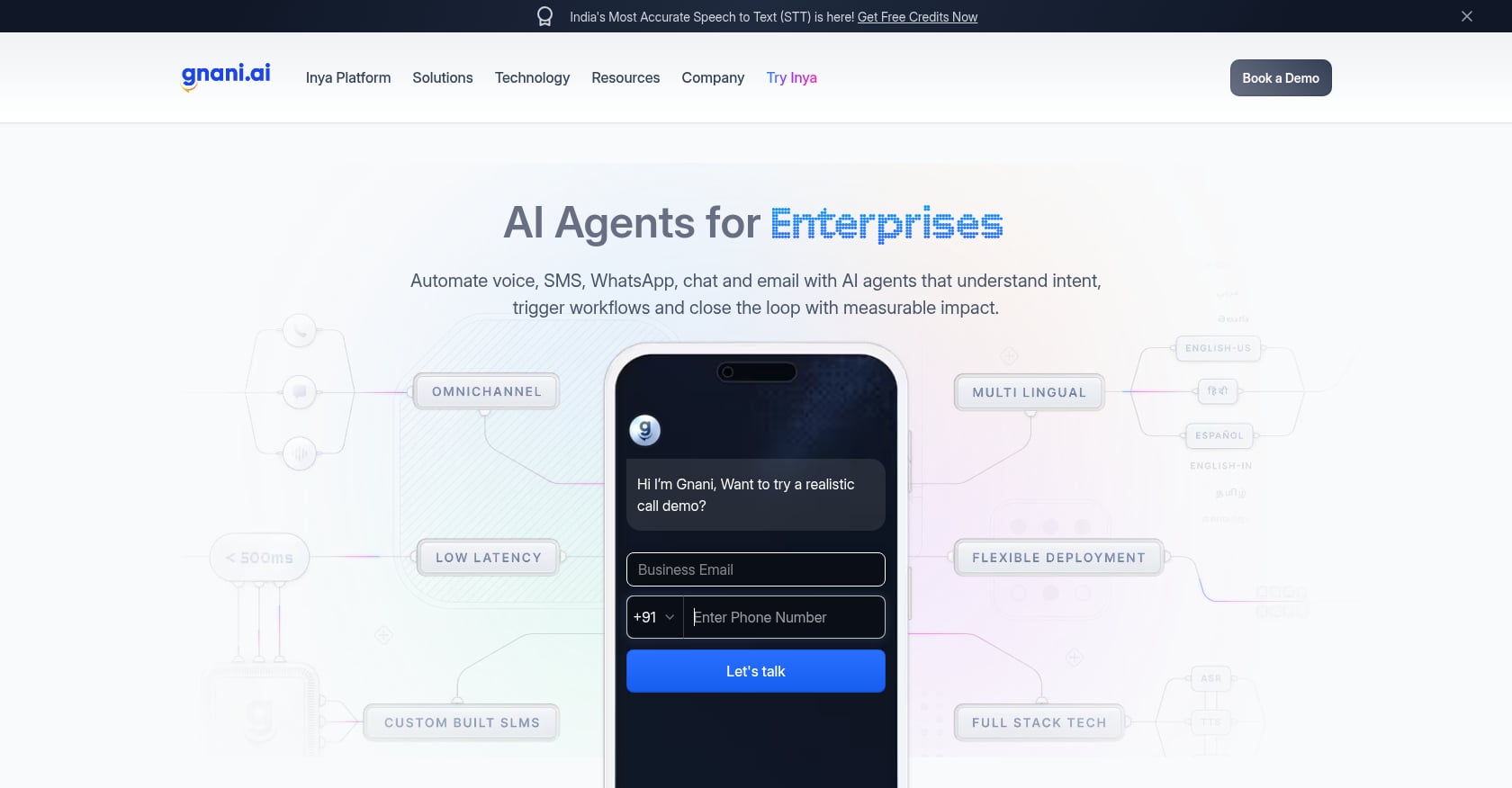
Best for: Enterprise BFSI operations in India needing vernacular voice AI at massive scale.
Pricing: Custom enterprise pricing, not publicly listed.
Key lead qualification features:
- 20+ Indian language support with dialect-level precision for Tier-2 and Tier-3 markets
- Voice biometrics for caller authentication
- Agentic AI for collections, lead qualification, and customer service
- Omnichannel support spanning voice, chat, SMS, and WhatsApp
- Automated quality assurance and call analytics
Background: Founded in 2016, Gnani.ai raised a $10M Series B and was selected for the IndiaAI Mission. The company holds significant patents in speech technology.
Limitations:
- Enterprise-only with no self-serve option. Expect lengthy procurement cycles.
- Heavy implementation requirements, meaning this isn’t a plug-and-play solution.
- Limited transparency on pricing or standard configurations.
Verdict: A serious contender for large banks and insurance companies deploying across India. The 20+ language coverage is the deepest in this list, though implementation complexity matches the capability.
5. Retell AI
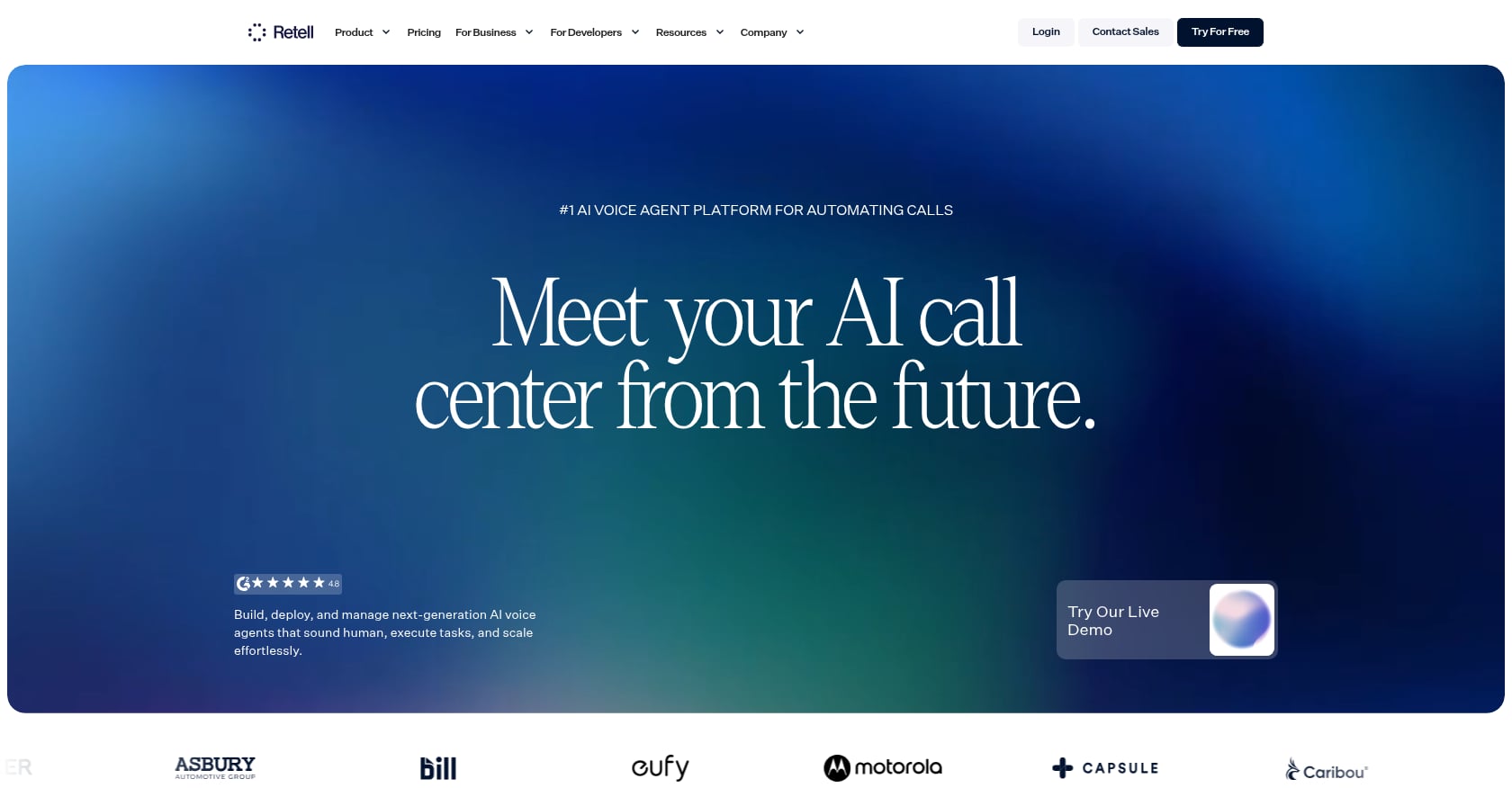
Best for: Developer teams building custom voice qualification agents from scratch.
Pricing: Starts at $0.07/min on paper, but real-world costs land between $0.13 and $0.31/min when you factor in LLM processing, telephony, and feature charges.
Key lead qualification features:
- Sub-600ms latency target (though real-world performance varies)
- Multilingual support
- Expressive text-to-speech
- Open API architecture for full customization
- CRM and calendar sync via API
User sentiment: Mixed. Developers praise the rapid setup, but multiple reviews and tests flag latency issues. Independent testing measured average response times around 800ms, with 1.1-second pauses on longer multi-turn conversations. Pricing restructures have also caught users off-guard.
Limitations:
- Requires significant technical expertise to deploy and maintain.
- Latency, the single most important factor for lead qualification conversations, is a documented weakness. Practitioners on Reddit cite pauses over 800ms as the point where callers start to distrust the system.
- Pricing complexity makes it hard to forecast costs accurately.
Verdict: Powerful for teams with engineering resources who want to build a bespoke qualification agent. Not the right choice if you want something production-ready out of the box.
6. Nextiva (XBert)
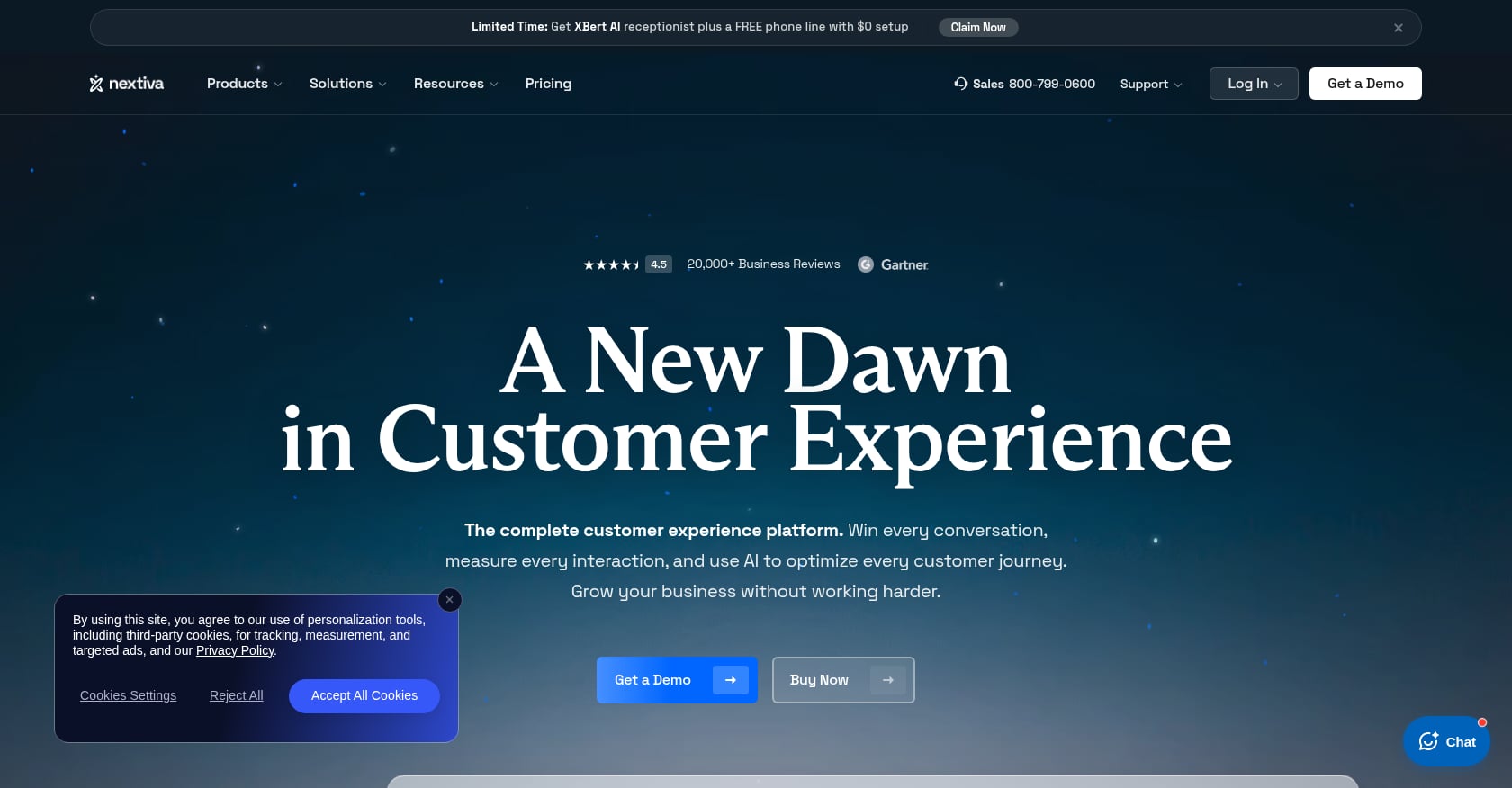
Best for: Small businesses wanting reliable 24/7 AI reception without complexity.
Pricing: $15/user/month for the platform, plus $99/month for the XBert AI receptionist add-on.
Key lead qualification features:
- Website-trained AI that learns from your business URL
- 24/7 lead capture with automatic SMS follow-up
- Smart appointment management and calendar integration
- Easy setup requiring no technical skills
User sentiment: G2 rating of 4.5/5 across 3,400+ reviews. Users praise reliability and simplicity.
Limitations:
- Doesn’t offer deep CRM integration comparable to sales-focused platforms.
- Primarily English-language support.
- Lead qualification logic is moderate, not suited for complex multi-step qualification processes.
Verdict: An excellent entry point for local businesses (HVAC, plumbing, dental) that just need calls answered and basic qualifying done around the clock. Outgrow it when qualification requirements get complex.
7. My AI Front Desk
Best for: Multi-language SMBs wanting affordable, broad AI reception coverage.
Pricing: $79/month on an annual plan, $119/month for the Pro plan.
Key lead qualification features:
- 100+ premium voice options for brand customization
- 6,000+ integrations via Zapier and native connectors
- Unlimited workflow automation
- Multilingual support
- Real-time call logs and notifications
Limitations:
- Lead qualification capabilities are basic to moderate. This is more of a smart answering service than a qualification engine.
- No BFSI-specific workflows or domain templates.
- Limited advanced analytics compared to enterprise tools.
Verdict: Great value for the price, especially for service businesses that need multilingual coverage. Don’t expect the kind of lead scoring or CRM-driven qualification that platforms like CloudTalk or Awaaz AI offer.
8. Dialpad
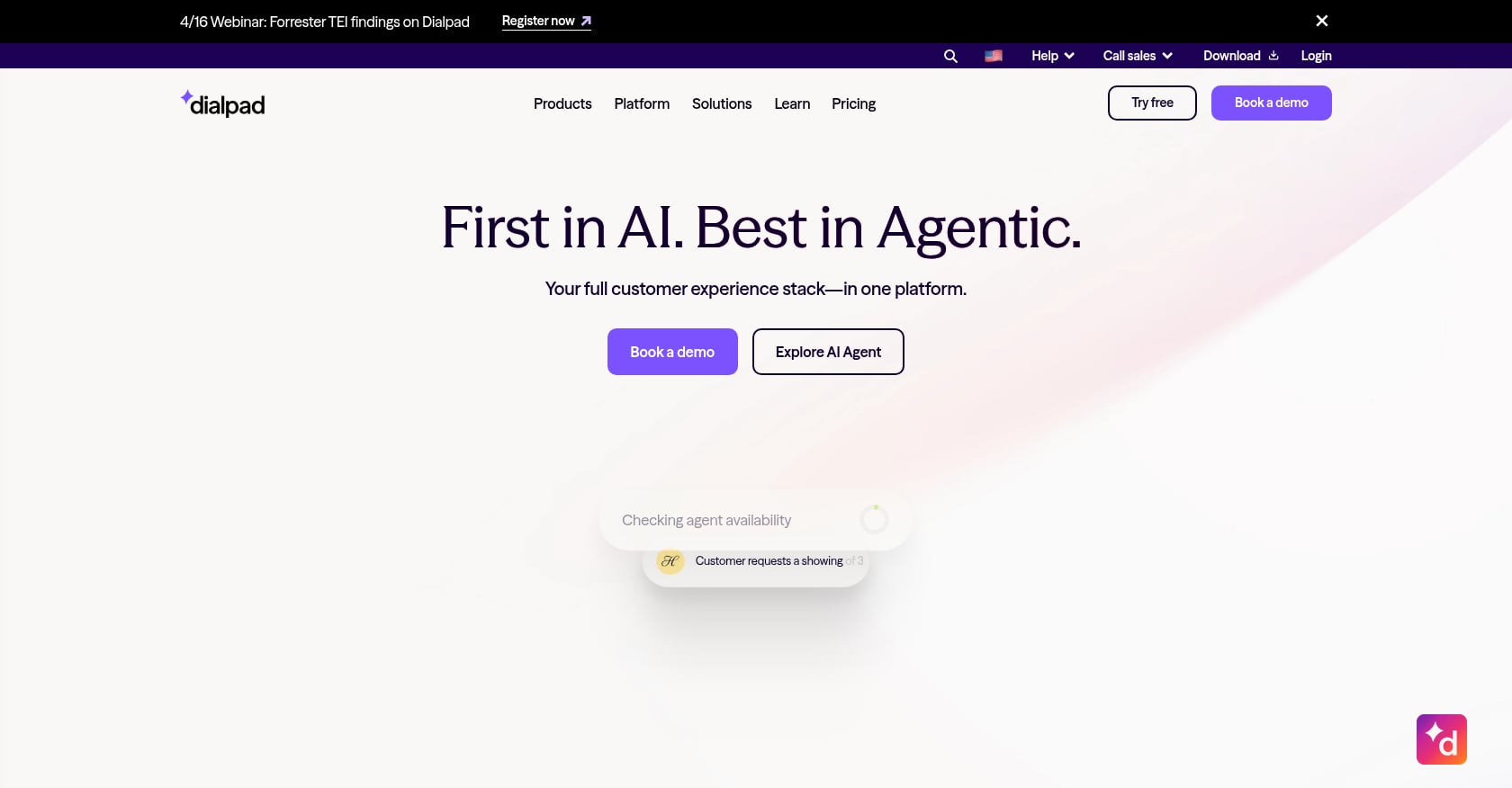
Best for: Sales teams wanting AI-powered coaching alongside lead qualification.
Pricing: Starts at $15/user/month. AI receptionist features require Pro or Enterprise tiers (quote-based).
Key lead qualification features:
- Real-time transcription and sentiment analysis
- AI-generated CSAT scores per interaction
- Custom keyword and phrase tracking for qualification triggers
- Proactive coaching cards that help agents improve during live calls
- Integrations with Google Workspace and Salesforce
User sentiment: G2 rating of 4.4/5 across 4,000+ reviews. Particularly praised for the depth of AI-driven insights.
Limitations:
- Advanced AI features are gated behind higher pricing tiers.
- No vernacular Indian language support.
- The coaching focus means it’s not purely an autonomous qualification tool. It’s best when humans are in the loop.
Verdict: Strong choice for teams that combine AI reception with sales coaching workflows. The analytics are genuinely useful for improving qualification over time.
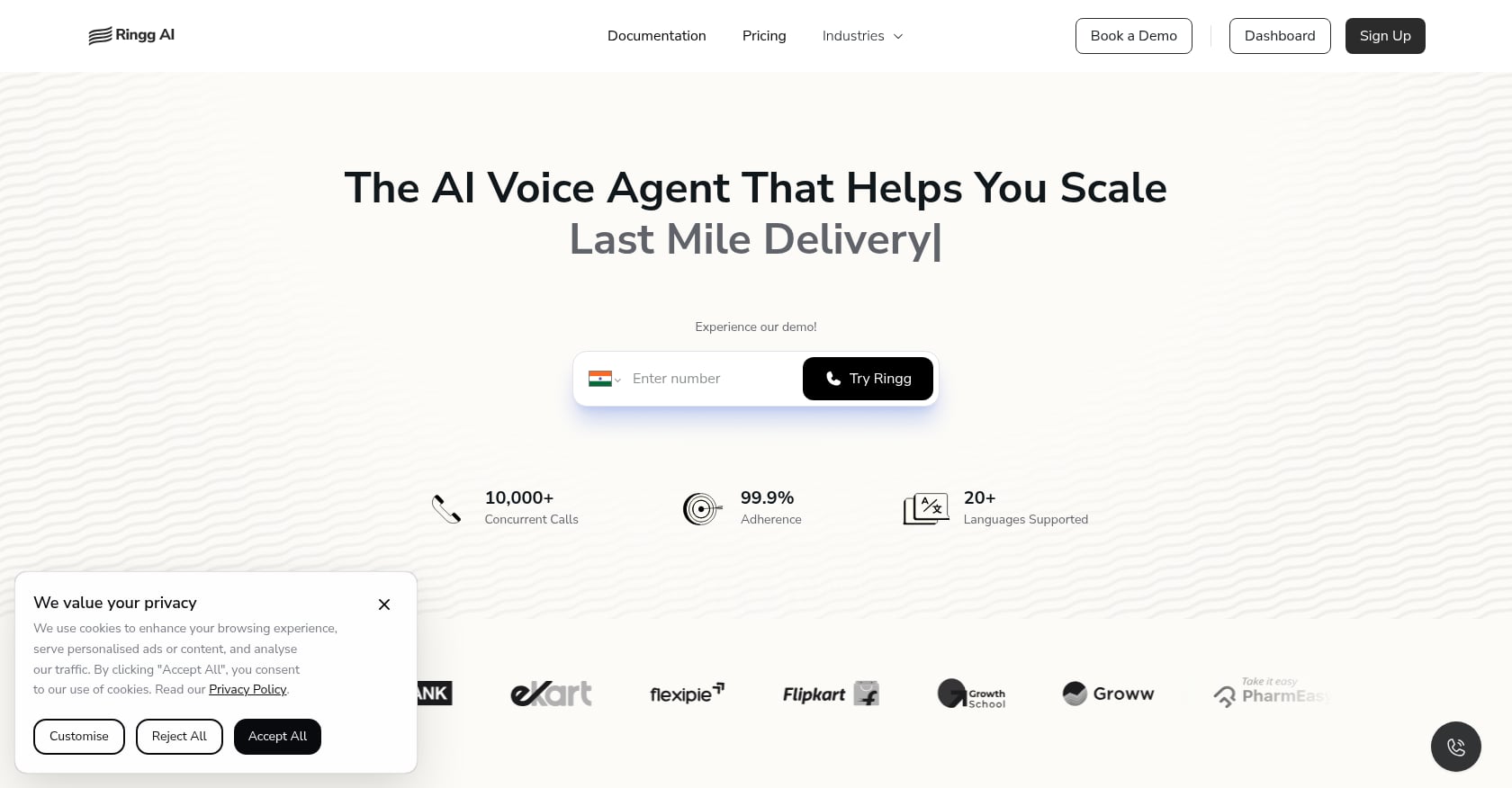
9. Ringg.ai
Best for: Businesses needing transparent, usage-based pricing for Indian language calling.
Pricing: Enterprise Plan from $0.06/min. Flexible Plan from $0.10/min.
Key lead qualification features:
- BFSI use cases including KYC verification, EMI collection reminders, and loan pre-screening
- 8+ Indian language support
- CRM integrations
- Call analytics and performance dashboards
Limitations:
- Relatively newer platform with limited independent reviews.
- Primarily outbound-focused, so inbound receptionist functionality is secondary.
- Smaller platform ecosystem compared to established enterprise players.
Verdict: The transparent pricing is genuinely refreshing in a market where most vendors hide costs behind “contact sales” buttons. Best for teams that want straightforward Indian language calling without enterprise-level procurement overhead.
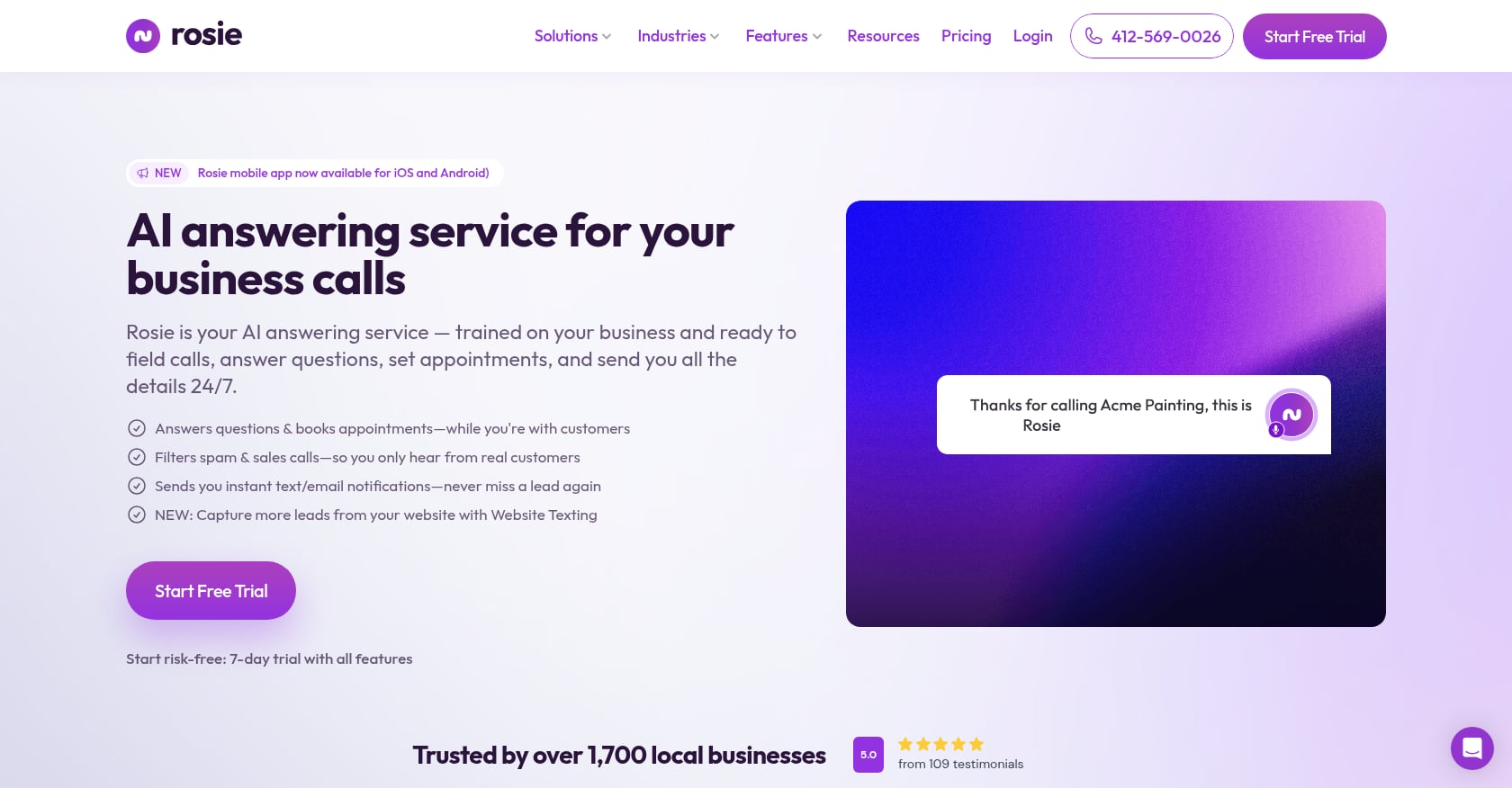
10. Rosie AI
Best for: Solopreneurs and micro-businesses on a tight budget.
Pricing: $41/month.
Key lead qualification features:
- Google Business Profile sync for local businesses
- Instant text-to-book appointment conversion
- Spam filtering
- SMS lead summaries after each call
Limitations:
- No CRM integrations beyond Google Business Profile.
- English only.
- No complex qualification logic. This handles basic intake, not multi-step qualification workflows.
Verdict: If you’re a solo operator who misses calls while on job sites, Rosie captures the basics at a price point that’s hard to argue with. It’s not a lead qualification tool so much as a reliable message-taker.
Why Multilingual Lead Qualification Is the Next Frontier
Most AI receptionist comparisons focus on English-speaking markets. That leaves a massive gap.
India’s conversational AI market is valued at approximately $288 million, with the BFSI sector alone facilitating over 50 million interactions monthly. The broader AI calling market in India is projected to reach $452.5 million by 2030, growing at 27.8% annually.
The reason these numbers matter for lead qualification is linguistic. Most Indian consumers are bilingual or trilingual. They don’t stick to one language during a phone conversation. A borrower in Maharashtra might start in Hindi, switch to Marathi for a technical question, then drop English terms for financial products. This is code-switching, and it’s standard behavior, not an edge case.
English-only AI receptionists fail in this environment. As one analysis from MultiLingual Magazine notes, “code-switching and contextual ambiguities are common in India, and AI models struggle to handle these linguistic complexities.” The data backs this up: vernacular-first voice interactions consistently outperform English-first IVR systems on both resolution rate and call completion in BFSI deployments.
For a deeper dive into how multilingual conversational AI addresses these challenges, that guide covers the technical and strategic dimensions. You can also explore AI voice solutions built specifically for Indian call centers.
An AI virtual receptionist with top lead qualification features for the Indian market must handle vernacular and mixed-language input natively. Anything less isn’t a minor limitation. It’s a structural inability to qualify the majority of inbound leads.
How to Choose the Right AI Receptionist for Your Business
With ten capable platforms on the table, here’s a practical decision framework.
Start with your call volume and peak patterns. If you handle fewer than 100 calls per month, a flat-rate tool like My AI Front Desk or Rosie AI keeps costs predictable. If you process thousands of calls daily, pay-per-minute models or enterprise platforms make more sense. To get a detailed picture of unit economics, calculating your call center cost per minute is a useful exercise before committing to any platform.
Match the platform to your industry. BFSI needs KYC verification flows, credit eligibility screening, and regulatory compliance baked in. Legal firms need conflict checks and case intake. HVAC companies need appointment booking. A general-purpose receptionist handles the last scenario fine. The first two demand domain-specific qualification logic.
Prioritize CRM integration depth. There’s a meaningful difference between “we log calls to your CRM” and “we pull customer history into the conversation and update records bidirectionally in real time.” CloudTalk and Awaaz AI sit on the advanced end. Rosie AI and Nextiva are more basic.
Test latency before you commit. Ask for a live demo and pay attention to pauses. The 800ms threshold matters. Practitioners on Reddit in r/EntrepreneurRideAlong report that AI voice agents “work really well” for structured qualification, but the experience degrades quickly when latency introduces awkward silences.
Understand the pricing model. Per-minute pricing favors variable call volumes. Flat-rate monthly pricing works for predictable patterns. Hybrid models (Smith.ai’s per-call pricing above a base tier) can get expensive if volumes spike. Run the numbers for your specific scenario before signing.
Gartner predicts that 85% of customer service leaders will explore or pilot conversational GenAI in 2025. The question isn’t whether to adopt an AI virtual receptionist with lead qualification features. It’s which one matches your business.
For teams that also need automated outbound calling solutions alongside inbound reception, look for platforms that handle both in a single stack.
The Bottom Line
The best AI virtual receptionist with top lead qualification features is the one that qualifies leads the way your industry demands: in the right language, at the right speed, with the right data flowing to the right systems.
For general SMBs in Western markets, CloudTalk offers the strongest combination of CRM integration, multilingual coverage, and reasonable pricing. For legal and financial professionals in the US who want human backup, Smith.ai’s hybrid model is hard to beat despite the premium cost.
For BFSI and fintech operations in India, the calculus is different. You need vernacular support, code-switching capability, domain-specific qualification workflows (KYC, credit eligibility, collections), and low-latency performance across millions of calls. Awaaz AI was built for exactly this scenario, with a proprietary telephony stack, finance-first agent templates, and omnichannel qualification across voice, SMS, and WhatsApp.
If that matches your use case, book a demo with Awaaz AI to see the platform in action. For banking-specific applications, the guide on customer experience in banking provides additional context on how AI qualification fits into a broader CX strategy.
Frequently Asked Questions
What is an AI virtual receptionist with lead qualification features?
It’s a voice AI system that answers inbound calls, asks qualifying questions based on predefined criteria, scores leads in real time, syncs data with your CRM, and routes or escalates based on the results. Unlike a basic auto-attendant, it conducts a structured conversation to determine whether a caller is a viable prospect before passing them to a human agent.
How much does an AI virtual receptionist cost?
Pricing varies widely. Budget options like Rosie AI start at $41/month. Mid-range platforms like My AI Front Desk run $79 to $119/month. Enterprise-grade tools like CloudTalk cost $19/user/month plus $350/month for AI features. Pay-per-minute models (Retell AI, Ringg.ai, Awaaz AI) range from $0.06 to $0.31/min depending on features and volume.
Can AI receptionists handle multilingual calls?
Some can. CloudTalk supports 60+ languages. Gnani.ai covers 20+ Indian languages. Awaaz AI supports 8+ Indian languages with Hinglish code-switching. However, most platforms (Smith.ai, Rosie AI, Nextiva) are limited to English or English plus Spanish. If your callers switch between languages mid-sentence, you need a platform specifically designed for that behavior.
What response latency is acceptable for lead qualification calls?
Under 800 milliseconds is the benchmark practitioners cite. Anything above that introduces noticeable pauses that erode caller trust. Testing data shows some platforms averaging over a second per turn, which causes callers to interrupt or hang up. Low latency is especially critical during qualification, when the AI needs to ask follow-up questions quickly to maintain conversational flow.
Are AI receptionists accurate enough for BFSI lead qualification?
For structured qualification flows (credit eligibility questions, KYC data collection, EMI reminders), yes. AI improves qualification accuracy by approximately 40% compared to manual processes. However, practitioners in Reddit communities note that AI agents struggle with unexpected or nuanced questions. The best BFSI-focused platforms, such as Awaaz AI and Gnani.ai, address this with domain-specific training and human-in-the-loop escalation paths.
How do AI receptionists integrate with CRMs?
Integration depth ranges from basic (call logs sent via Zapier) to advanced (bidirectional sync where the AI pulls customer history into the conversation and writes qualified lead data back). CloudTalk, Awaaz AI, and Dialpad sit on the advanced end with native integrations to platforms like Salesforce, HubSpot, and various CDP systems. Always test whether the integration writes data back to your CRM in real time or in batches.
Can an AI receptionist replace a human receptionist entirely?
For routine calls and structured qualification, yes. For complex consultative conversations, no. The consensus among practitioners is clear: AI receptionists are production-ready for appointment booking, basic qualification, and data capture. They fall short when callers ask unexpected questions or need nuanced judgment. The best approach for most businesses is using AI for first-pass qualification and routing complex cases to humans.
What’s the difference between an AI receptionist and an IVR system?
Traditional IVR systems use fixed menu trees (“Press 1 for sales, Press 2 for support”). AI receptionists conduct natural language conversations, understand intent, ask dynamic follow-up questions, and make routing decisions based on the full context of the call. The qualification capability of an AI receptionist is fundamentally different from an IVR’s menu navigation.