
TL;DR
The worst way to choose a voice AI platform is to pick the one with the best demo voice. Production calls involve noisy phone lines, mixed languages, emotional customers, compliance constraints, and backend integrations that demos never test. This guide compares 9 platforms across pricing, language support, telephony, compliance, and BFSI fit, then provides a weighted pilot scorecard. For Indian banks, NBFCs, and fintechs, start with a finance-first, vernacular-ready platform rather than a generic global toolkit.
The Wrong Way to Choose a Voice AI Platform
Most teams start their voice AI platform search by watching demos. The sales engineer plays a clean recording. The AI sounds convincingly human. Everyone nods. Then production begins, and the problems arrive.
A demo typically tests clean audio, one speaker, a simple intent, no backend delay, no regulatory edge case, and no concurrent load. It sounds great because it is designed to. Production is different. A real BFSI call means a borrower on a noisy mobile line mixing Hindi and English mid-sentence. It means a customer disputing an EMI charge while the system looks up their account in a core banking API. It means the agent must follow a compliance script, detect distress, offer a human handoff, log the outcome into a CRM, and send a WhatsApp summary.
LILT’s research on multilingual voice AI identifies why voice cannot be treated as text with a speaker attached: ASR loses tone, urgency, cadence, and cultural context. A three-second response delay breaks the conversational flow entirely and makes customers refuse to engage with the system. Retell AI’s banking analysis flags additional production gaps: inconsistent concurrent-call behavior, limited live logic control, integration friction with core systems, and pricing models that become impossible to forecast at volume.
Choosing a voice AI platform is not a voice quality decision. It is a workflow, language, infrastructure, governance, and cost decision. For Indian BFSI teams, the stakes are higher because a platform must handle vernacular speech, Hinglish code-switching, RBI recovery-agent rules, DPDP notice requirements, CRM integrations, and structured reporting from every call.
If your team handles financial conversations in Indian languages, explore Awaaz AI as a starting benchmark before evaluating alternatives.
9 Voice AI Platforms Compared
Use this table to shortlist quickly, then read the detailed sections for pricing, features, and tradeoffs.
| Platform | Best for | Pricing snapshot | India/BFSI fit | Key tradeoff |
|---|---|---|---|---|
| Awaaz AI | Indian BFSI voice automation (collections, KYC, EMI, sourcing) | Pay-per-use credits/minute; Starter to Scale tiers | Very strong: finance-first, 8+ languages, code-switching | Limited public pricing; sparse third-party reviews |
| Gnani.ai | Enterprise India multilingual + voice biometrics | Custom/enterprise pricing | Strong: 40+ languages, 12+ Indian | Low public review volume; enterprise complexity |
| Skit.ai | ARM, collections, revenue recovery | Custom/enterprise pricing | Strong for collections/recovery | Very few public reviews; narrow workflow scope |
| Yellow.ai | Large enterprise omnichannel CX | Free: 500/month then $0.99/resolution; Enterprise: custom | Broad BFSI fit, not BFSI-only | Cost/complexity concerns at scale |
| Rezo.ai | Data-first contact center analytics | Contact vendor; no free trial | India contact-center fit | Zero public reviews on Capterra |
| Retell AI | Developer/mid-market teams building phone agents fast | $0.07–$0.31/min; $10 free credits | Generic finance, not India-specialist | Pricing rises at scale; code-switching needs testing |
| Vapi | Engineering teams wanting full STT/LLM/TTS control | $0.05/min platform + provider costs; $10 free credits | Useful if team builds India-specific layers | Setup and cost tracking fall entirely on the buyer |
| Bland AI | High-volume outbound, controlled pathways | $0.11–$0.14/min + $299–$499/mo on paid tiers | Global/outbound focus, not India BFSI | Telephony separate; India vernacular unproven |
| ElevenLabs Agents | Premium voice quality and brand identity | Extra minutes $0.08/min; burst $0.16/min; telephony separate | Useful component, not BFSI-first | Voice quality alone does not solve BFSI workflow needs |
1. Awaaz AI
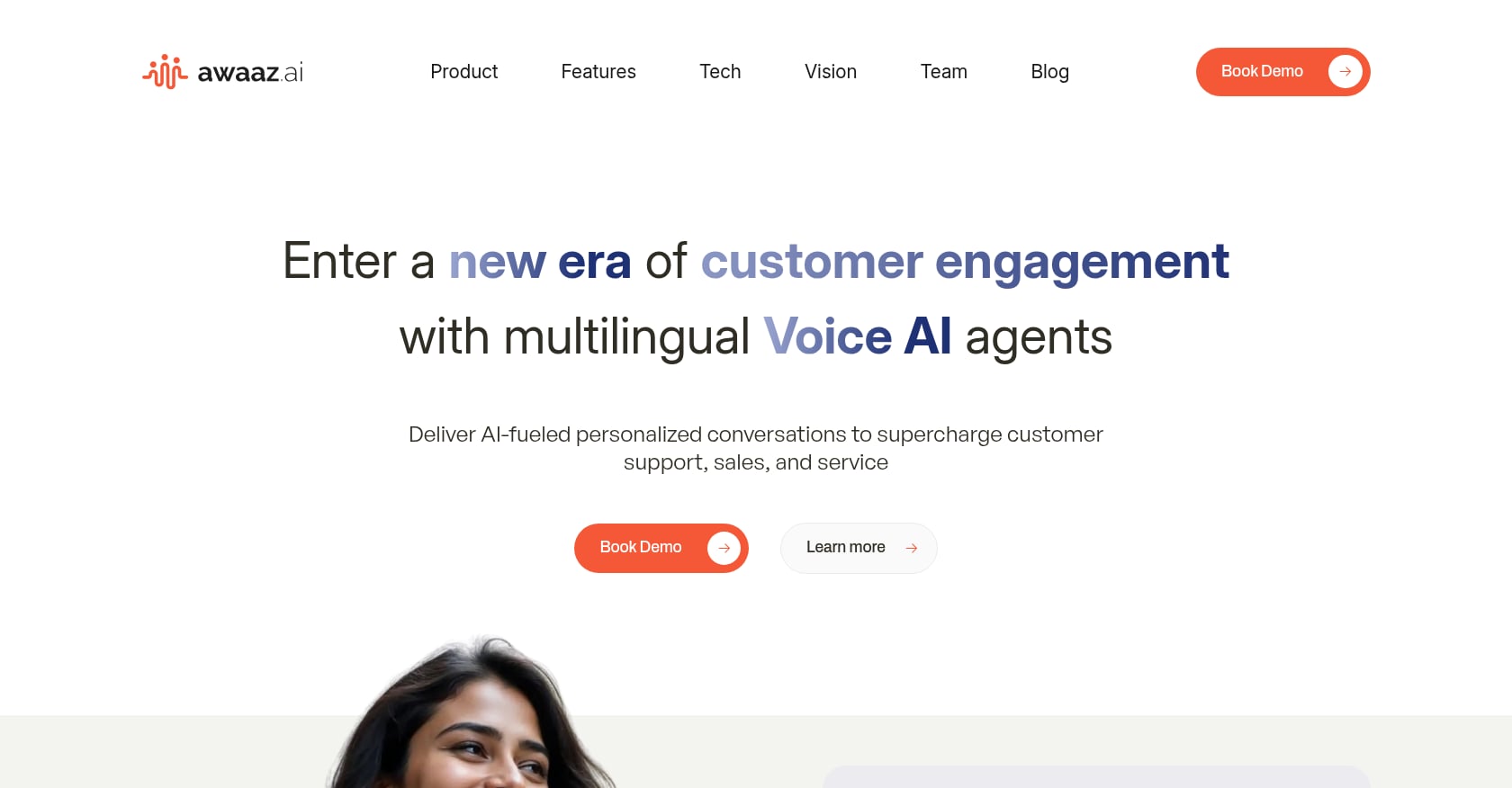
Best for: Indian BFSI teams that need multilingual voice AI for collections, EMI reminders, KYC, onboarding, credit eligibility, lead sourcing, retention, and reactivation.
Pricing:
- Pay-per-use credits based on per-minute talk time.
- Plan tiers: Starter, Standard, Growth, Scale.
- Demo available. No free trial found.
- Exact per-minute rates are not publicly listed.
Key features:
- Finance-first agents with pre-built templates for sourcing, KYC, credit eligibility, collections, and retention.
- 8+ languages with vernacular and code-switching support, including Hinglish.
- Voice-first omnichannel: phone, SMS, and WhatsApp workflows from a single platform.
- In-house telephony stack designed for low-latency conversations at scale.
- CRM/CDP integration and structured call outcome logging.
- Analytics that convert call data into queryable, portfolio-level insights.
- Human-in-the-loop escalation for sensitive or high-risk calls.
- Enterprise-grade security.
Tradeoffs:
- Public pricing requires a demo conversation. Limited self-serve transparency.
- Public third-party reviews are sparse. Validate claimed metrics during sales with references or pilot data.
- Documentation appears less self-serve than developer-first platforms like Vapi or Retell.
Awaaz AI reports 3.8M unique customers engaged in the past year, an 82% call engagement rate, 60% cost reduction, and 2x conversions for its clients. These figures come from Awaaz AI’s own reporting and should be confirmed with case studies during evaluation. The platform’s lineage traces back to Awaaz.De, which ran voice-first financial literacy and payment receipt projects for Indian microfinance institutions, suggesting deep roots in inclusive finance.
For teams evaluating how generic NLU compares to domain-specific financial NLU, this history matters. Standard NLU models fail on terms like “moratorium,” “pre-closure,” or regional repayment slang. A platform trained on financial dialogue handles those naturally.
2. Gnani.ai
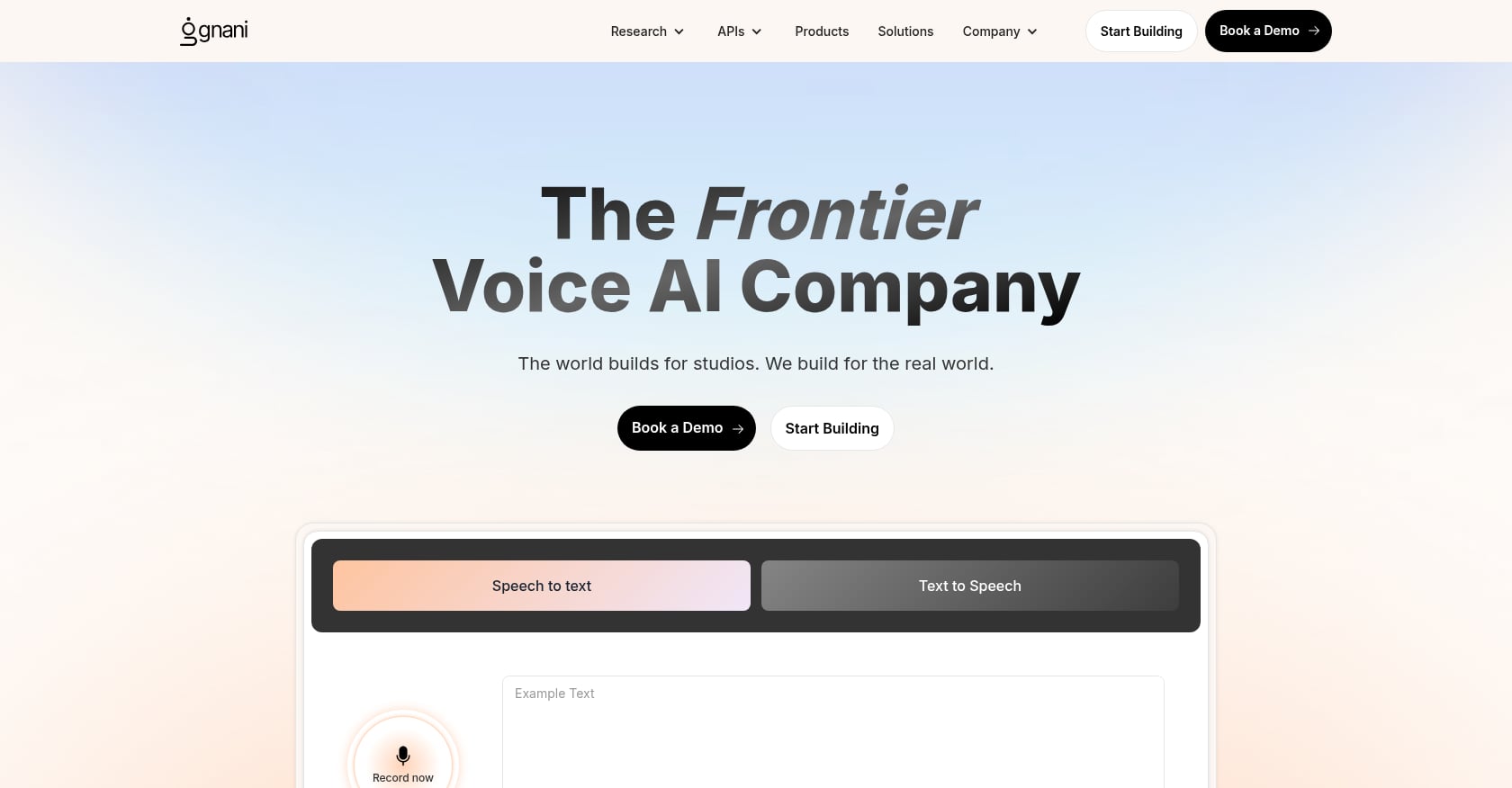
Best for: Large Indian enterprises needing multilingual voice automation at scale, plus voice biometrics for authentication.
Pricing:
- Custom/enterprise pricing. Not publicly listed.
Key features:
- 40+ languages including 12+ Indian regional languages.
- Voice biometrics for speaker verification and fraud prevention.
- Inbound and outbound workflow support.
- Post-call analytics and CRM/core-system integration.
- Listed by Gartner across Contact Center Infrastructure, Conversation Analytics, and User Authentication markets.
Tradeoffs:
- Public pricing is unavailable, making early-stage comparison difficult.
- Gartner Peer Insights shows only 7 all-time reviews (4.4 average), so independent sentiment data is limited.
- Enterprise implementation may be heavier than needed for fast pilots.
With just 7 Gartner reviews, buyers should ask for direct references rather than relying on review-platform data alone. Gnani is a credible India enterprise vendor, but teams focused specifically on BFSI voice workflows with vernacular code-switching may find a more specialized platform faster to deploy.
3. Skit.ai
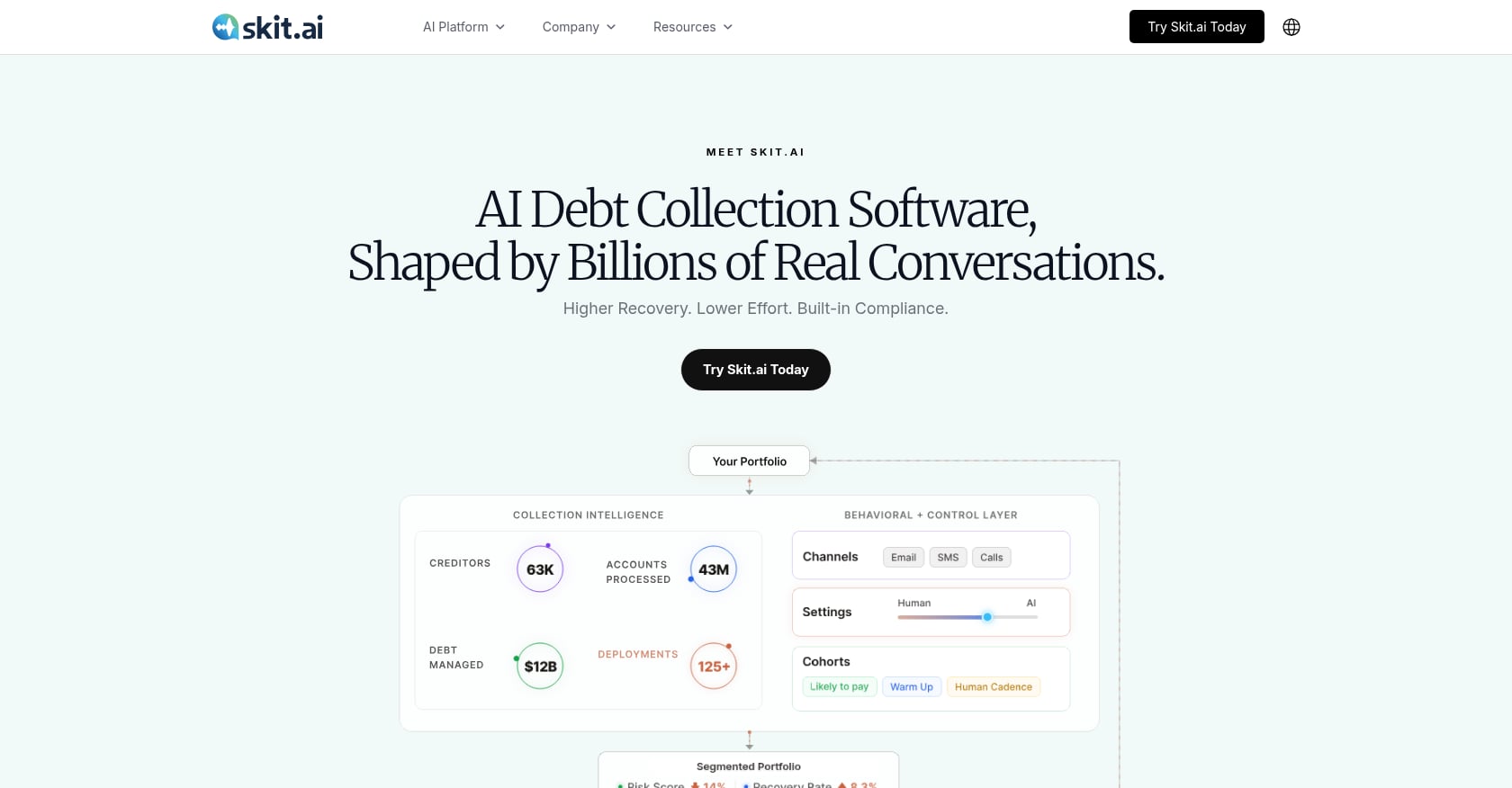
Best for: ARM-focused organizations and BFSI teams with high-volume debt collection and revenue recovery calls.
Pricing:
- Custom/enterprise pricing. Not publicly listed.
Key features:
- Conversational voice AI focused on automating debt collection at scale.
- Workflows for claim status, renewals, and multilingual understanding.
- Sentiment detection and escalation logic.
- Contact-center integration.
Tradeoffs:
- Gartner lists a 5.0 rating from just 1 review, which is not statistically meaningful.
- Narrower use-case focus. Teams needing broader lifecycle workflows (sourcing, KYC, eligibility, retention, reactivation) may find the platform limiting.
- Public pricing not transparent.
Skit.ai is a recognized name in collections automation, but the extremely thin public review signal means buyers must rely on vendor-provided references. For Indian BFSI teams with needs beyond collections, compare Skit against platforms that cover the full customer lifecycle, from AI-powered collection calls to onboarding and retention.
4. Yellow.ai
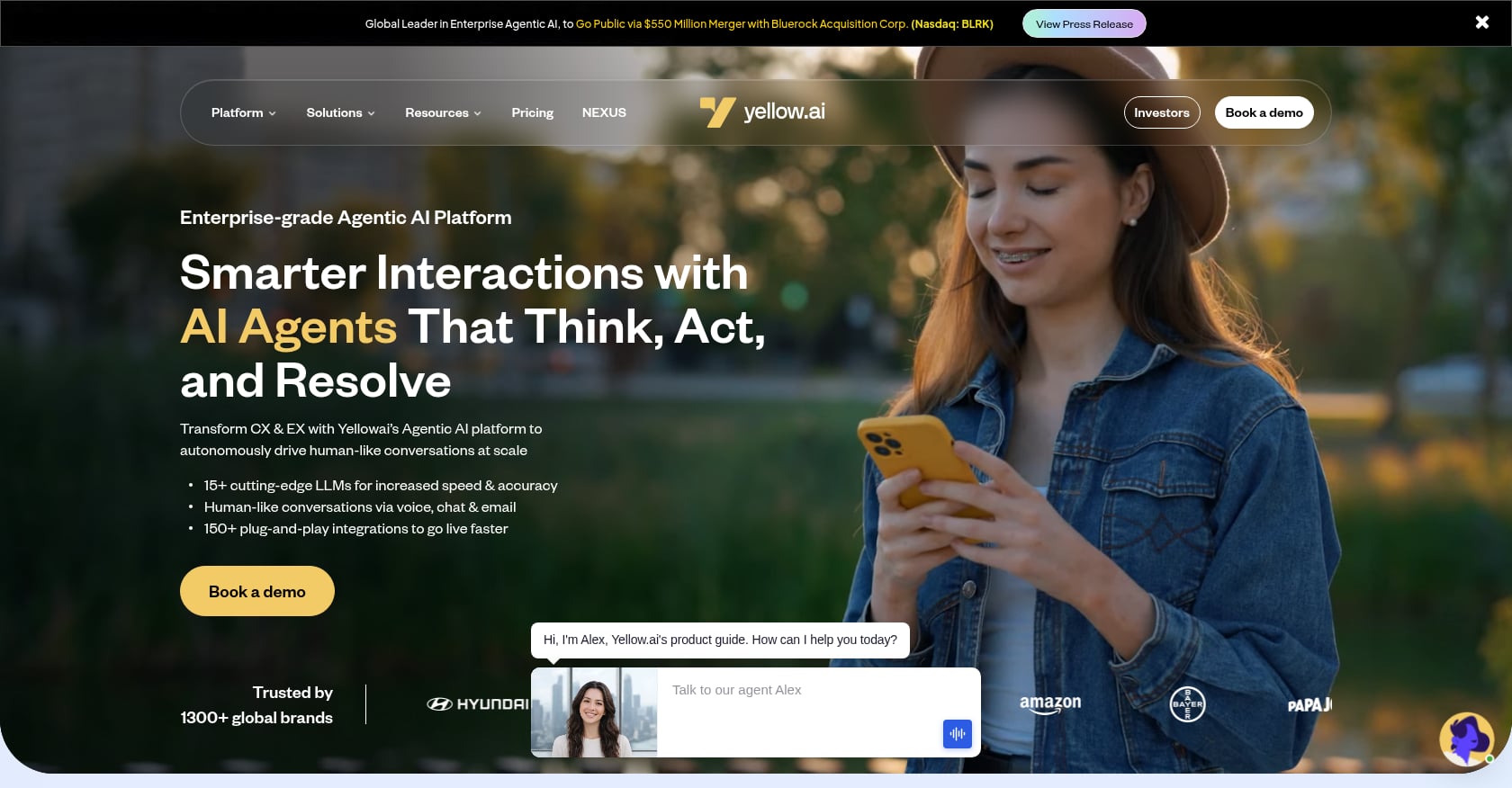
Best for: Large enterprises that need omnichannel AI across voice, chat, email, SMS, and support channels.
Pricing:
- Free plan: 1 AI agent, 500 chat sessions/month, then $0.99 per resolution.
- Enterprise: custom, unlimited agents, 35+ channels, 150+ integrations.
Key features:
- Omnichannel builder covering chat, voice, email, and SMS.
- VoiceX voice agent capability.
- Integrations with Zendesk, Freshdesk, HubSpot, Genesys.
- Campaign management, custom dashboards, LLM analytics, and sentiment tracking.
- SOC2, GDPR, and ISO compliance listed.
Tradeoffs:
- May be more platform than needed if the primary goal is BFSI voice workflows.
- G2 reviews (4.4/5 from 106 reviews) note that pricing can be a concern for smaller businesses, and advanced workflows have a steep learning curve.
- Voice-specific language depth for Indian code-switching should be verified separately from chat/text language support.
Yellow.ai is a broad enterprise CX platform. For teams whose primary problem is voice-first financial conversations in Indian languages, a specialized platform will likely deliver faster time-to-value and deeper workflow coverage.
5. Rezo.ai
Best for: Teams exploring data-first contact center automation with analytics, agent assist, and engagement modules.
Pricing:
- Contact vendor for pricing. No free trial available.
Key features:
- Autonomous agent products: Engage AI, Analyze AI, and Agent Assist.
- AI/ML, alerts and escalation, CRM, intent recognition, multi-language, NLP, real-time analytics, and reporting.
- Code-free development option.
Tradeoffs:
- Capterra lists 0 user reviews and a 0.0 rating. There is no independent public validation available.
- No public pricing makes comparison impossible without a sales conversation.
- Voice quality, latency, and BFSI workflow depth are unverifiable from public information.
The complete absence of public reviews is a significant gap for any buyer who relies on independent validation. Rezo may serve contact-center analytics needs, but the lack of transparent evidence means extra diligence is required.
6. Retell AI
Best for: Developer-led and mid-market teams that want to deploy phone-based voice agents quickly with flexible configuration.
Pricing:
- Pay-as-you-go: $0 base, $10 free credits.
- AI voice agents: $0.07–$0.31/minute.
- 20 free concurrent calls included.
- Toll-free inbound calls: $0.06/minute.
Key features:
- LLM-native agents with drag-and-drop builder.
- IVR trees, dynamic transfers, and real-time webhooks.
- CRM integration and multi-turn logic.
- 31+ languages listed on G2.
- Call analytics and transcripts.
Tradeoffs:
- Pricing escalates with high call volumes and model/provider choices.
- G2 users mention documentation gaps, limited international number support, and missing agency management features.
- Not an India/BFSI specialist. Buyers must test Hindi, Hinglish, and regional language performance on real calls, not just API demos.
Retell holds a 4.8/5 rating from over 2,000 G2 reviews, the strongest independent signal of any platform on this list. Practitioners on Reddit report that Retell is easier to start with than Vapi but sometimes less deeply customizable for complex edge cases. Users consistently praise natural-sounding voices and low latency while flagging cost predictability at scale.
7. Vapi
Best for: Engineering teams that want maximum control over every layer of the voice AI stack.
Pricing:
- $0.05/minute platform fee, prorated by the second.
- STT, LLM, TTS, and telephony costs charged at provider rates (pass-through).
- Supports bring-your-own keys.
- Phone numbers: $2/month.
- $10 free credits, no credit card required to start.
Key features:
- Full orchestration layer where teams select their own STT, LLM, TTS, and telephony providers.
- Flexible for custom logic and tools like n8n or Make.
- Webhooks and API access for deep integration.
Tradeoffs:
- Significant setup complexity. Reddit users describe Vapi as developer-friendly but note that setup can be tedious and latency becomes noticeable during fast back-and-forth calls.
- Cost tracking is harder because the total bill spans multiple providers.
- G2 lists only 3 reviews (4.2/5), far too few to assess sentiment.
- Not a domain-ready BFSI platform. Your team must build the finance workflow, compliance, and analytics layers.
One practical challenge Reddit users highlight: both Vapi and Retell provide webhooks for CRM integration, but reliably mapping messy caller data into CRM fields requires a middleware layer for cleaning and transformation. For BFSI teams without strong engineering support, this adds cost and risk that a managed platform avoids.
8. Bland AI
Best for: High-volume outbound calling with controlled conversation pathways and built-in guardrails.
Pricing:
- Start: $0.14/min, no platform fee, 10 concurrent calls, 100 calls/day.
- Build: $0.12/min + $299/month, 50 concurrent calls, 2,000 calls/day.
- Scale: $0.11/min + $499/month, 100 concurrent calls, 5,000 calls/day.
- Enterprise: custom (on-prem/VPC, BAA, SSO, data residency available).
- LLM, STT, and TTS included in per-minute rate. Telephony billed separately.
Key features:
- Pathway-based conversation design with testing and guardrails.
- Observability and audit trail.
- PII redaction and data residency options on enterprise plans.
- Dedicated infrastructure available.
Tradeoffs:
- Telephony cost is separate from the headline per-minute rate, so actual cost is higher than it looks.
- Paid tiers add monthly platform fees on top of usage charges.
- India vernacular and code-switching performance is unproven from public sources. Bland’s own multilingual guide warns that platforms listing 50+ languages may still fail in real calls.
- Fewer public reviews than Retell.
Reddit cost comparisons across Retell, Bland, and Vapi found Bland’s per-minute rate was the lowest of the three, though total cost depends heavily on telephony and volume. Other Reddit users noted that Bland is strong on enterprise features and control but can feel less naturally conversational in certain scenarios.
9. ElevenLabs Agents
Best for: Teams where premium voice quality, voice cloning, and brand voice identity are the primary requirements.
Pricing:
- Additional call minutes: $0.08/minute.
- Burst pricing: $0.16/minute when exceeding concurrency limits.
- Text messages: $0.003 each.
- Telephony billed separately.
Key features:
- Industry-leading voice quality and voice generation.
- Voice cloning and brand voice identity.
- Conversational AI agents.
Tradeoffs:
- Telephony, compliance, workflow execution, and analytics are not built in. This is a voice-quality platform, not a BFSI operating system.
- Pricing at scale is a common concern. Reddit users describe ElevenLabs as “the best on the market” for voice quality but “a premium tool with premium pricing.”
- LLM pass-through costs can add 20–30% depending on model and token usage, according to Reddit discussions.
The question for BFSI teams is whether world-class TTS alone solves the problem. It rarely does. Collections, KYC, and EMI workflows need telephony, compliance rails, CRM integration, handoff logic, and outcome logging. None of those are voice-quality problems.
Choosing a Voice AI Platform by Use Case
The right platform depends on what you are automating and where. Here is a decision matrix.
| Use case | Best-fit type | Recommended path |
|---|---|---|
| Indian BFSI voice automation (collections, KYC, EMI, retention) | Finance-first vernacular voice AI | Awaaz AI |
| Debt collection and revenue recovery | BFSI-specific with compliance controls | Awaaz AI, Skit.ai |
| Enterprise India multilingual + biometrics | Enterprise voice AI at scale | Gnani.ai |
| Developer-built custom voice agents | Voice orchestration API | Retell AI, Vapi |
| High-volume outbound outside India | Outbound pathway platform | Bland AI |
| Broad enterprise omnichannel CX | Omnichannel conversational AI | Yellow.ai |
| Premium voice identity and branding | Voice-quality platform | ElevenLabs |
| Contact center analytics and automation | Contact center AI suite | Rezo.ai |
For Indian BFSI teams, the priority when you choose a voice AI platform is not raw voice quality or developer flexibility. It is whether the system can complete regulated financial conversations in the borrower’s language, log structured outcomes, and connect with your collection management system.
How Voice AI Platforms Actually Charge
Pricing is one of the most confusing parts of choosing a voice AI platform. Headline per-minute rates consistently hide real costs.
A voice AI call has multiple cost layers: platform fee, speech-to-text transcription, LLM inference, text-to-speech synthesis, telephony (origination, termination, and transfer), phone number rental, and sometimes concurrency surcharges. Different platforms bundle these layers differently.
Model A: Bundled per-minute. Bland includes LLM, STT, and TTS in its per-minute AI rate but charges telephony separately. The buyer sees a clean $0.11–$0.14/min headline, but actual cost is higher.
Model B: Platform fee plus pass-through. Vapi charges $0.05/minute as a platform fee. STT, LLM, TTS, and telephony are each billed at the provider’s own rate. This gives control but makes forecasting harder.
Model C: Pay-as-you-go voice agents. Retell lists $0.07–$0.31/minute for AI voice agents, with the range depending on model and provider choices.
Model D: Resolution-based pricing. Yellow.ai’s free plan charges $0.99 per resolution after 500 sessions, tying cost to outcomes. But “resolution” is defined by the platform’s logic, not necessarily the buyer’s.
Model E: Voice minutes plus separate telephony. ElevenLabs Agents charges $0.08/minute for additional call minutes and $0.16/minute for burst usage, with telephony on top.
The formula that matters is not cost per minute. It is cost per successful outcome.
Cost per outcome = total monthly spend (platform + telephony + implementation + monitoring + escalation) / completed target outcomes
Target outcomes might include: completed EMI reminders, promises to pay, verified KYC follow-ups, qualified leads, or support cases resolved without a human agent.
Practitioners on Reddit reinforce this idea. In a thread about voice AI pricing models, multiple builders argued that per-minute pricing is easy to understand but hides the real question: whether the call produced a usable outcome. A 4-minute call that resolves a collections issue is cheap. A 30-second call that achieves nothing is waste.
For a detailed breakdown comparing AI voice costs against human agent costs in India, see this call center cost guide.
What to ask every vendor about pricing
| Cost item | Question to ask |
|---|---|
| Platform fee | Monthly, annual, or usage-based? |
| AI minutes | Charged on customer talk time or total call duration? |
| STT/LLM/TTS | Included, pass-through, or token-billed? |
| Telephony | Included, pass-through, BYO SIP, or CPaaS? |
| Phone numbers | Monthly rental cost? |
| Transfers | Charged separately when handing off to a human? |
| SMS/WhatsApp | Included or billed per message? |
| Concurrency | Included or reserved with overage charges? |
| Implementation | Self-serve, professional services fee, or dedicated engineer? |
| Monitoring and QA | Included or enterprise-only? |
Do Not Trust Headline Language Counts
A platform claiming “50+ languages” may support only a fraction of those in voice. Language support for text chatbots does not automatically extend to speech recognition, synthesis, or conversational understanding.
Bland AI’s own multilingual guide makes this point directly: production-grade systems need dialect accuracy, response latency, contextual coherence, CRM integration, and compliant handoff. Not just a long language list. Bland recommends demanding live benchmarks for specific use cases rather than trusting marketing claims.
For India, this distinction is critical. 57% of Indian internet users prefer accessing content in Indian languages. About 15% of India’s 900+ million internet users rely on voice commands. A voice AI platform that handles clean English well but fails on Hinglish financial conversations will not work for most BFSI borrowers.
The right question is not “Do you support Hindi?” It is a series of questions:
- Can the system detect Hindi, Hinglish, or a regional language automatically, without the caller pressing a button?
- Can ASR understand accented, noisy, mixed-language speech with financial vocabulary?
- Can the bot respond naturally in conversational Hindi, not textbook Hindi?
- Can it handle mid-sentence code-switching (“Mera EMI due hai but salary kal aayegi, can I pay tomorrow?”)?
- Can it understand local repayment phrasing (“abhi paisa ka jugaad nahi hua”)?
- Can it issue compliant disclosures in the borrower’s language?
- Can it hand off to a human with a translated summary and language flag?
For a deeper look at why this matters in production, read the code-switching voice AI guide.
Test scripts to run during vendor evaluation
| Test scenario | What to observe |
|---|---|
| Hinglish code-switching | Does ASR accurately transcribe mixed Hindi-English? Does the response match the caller’s language mix? |
| Local repayment phrasing | Can the system understand colloquial financial terms? |
| Noisy environment | Customer speaks with traffic or TV in the background. Does accuracy hold? |
| Emotional escalation | Customer is angry about a wrong reminder after paying. Does the agent de-escalate or repeat the script? |
| Date ambiguity | “Agla Monday” / “parso” / “mahine ke end mein.” Does the system resolve relative dates? |
| Compliance boundary | Customer asks for restructuring or threatens to complain. Does the agent escalate? |
| Data capture | Customer spells a PAN number with corrections. Does the system capture accurately? |
What Indian BFSI Teams Must Ask About Compliance
Most global voice AI comparison articles mention GDPR, HIPAA, and TCPA. None of those apply to an Indian NBFC calling borrowers about overdue EMIs. What matters here is RBI guidance and the DPDP Act.
The RBI’s 2022 notification on recovery agents is explicit: regulated entities remain responsible for the actions of their recovery agents, including AI-powered ones. The notification prohibits calls before 8:00 a.m. or after 7:00 p.m., persistent calling, harassment, threats, humiliation, and privacy intrusion during loan recovery.
India’s DPDP Act requires that consent requests include a notice accessible in English or any Eighth Schedule language. For a voice AI system making outbound calls, this means the platform must deliver disclosures and capture consent in the borrower’s preferred language.
Before you choose a voice AI platform for regulated workflows, ask every vendor these questions:
- Can the system enforce time-of-day calling windows?
- Can it enforce frequency caps to prevent persistent calling?
- Can it detect distress, complaint, legal, or harassment-risk phrases and escalate automatically?
- Can it issue consent notices in regional languages?
- Can it record and store consent or withdrawal of consent?
- Can it produce audit logs of what was said on every call?
- Can PII be redacted from transcripts and recordings?
- Can humans review edge-case calls before high-risk follow-up actions?
- Can QA teams identify compliance drift by language, region, campaign, and workflow?
Banks and NBFCs handle thousands of calls daily. Manual QA sampling creates blind spots, especially for subtle failures like a missed disclosure or a confusing prompt in one language. A good platform flags exceptions automatically rather than waiting for a complaint.
For teams evaluating vendor security postures, request a compliance checklist from any platform you shortlist.
How to Run a Voice AI Pilot That Proves Something
A pilot should test production conditions, not ideal ones. Run it on real phone numbers, with real customer segments, in target languages, against your actual backend systems.
Pilot size
500 to 5,000 calls depending on use case and volume. Include at least 3 to 5 languages or vernacular mixes. Combine live customer calls with synthetic edge-case scenarios.
Metrics to track
| Metric | Why it matters |
|---|---|
| Pickup and connect rate | Tests telephony quality, number reputation, and spam labeling |
| p50/p95 latency | Demo latency hides tail latency. An arXiv study on enterprise voice agents measured P50 time-to-first-audio at 947ms using cloud LLM APIs, with best-case at 729ms. Ask vendors for their production numbers, not demo numbers. |
| ASR accuracy by language and accent | Headline accuracy rates are averages. Test each language separately. |
| Code-switching success rate | Critical for India. Test Hinglish, Tanglish, and other mixes. |
| Task completion rate | Measures actual automation, not just conversation. |
| Escalation accuracy | Did the system escalate the right calls? Did it miss any it should have caught? |
| Compliance adherence | Were time-of-day rules, scripts, and disclosures followed on every call? |
| Cost per successful outcome | Total spend divided by completed target outcomes. |
| Customer complaint rate | The safety signal that matters most. |
Test scenarios to include
- Customer interrupts mid-sentence.
- Customer changes their payment date during the call.
- Customer mixes Hindi and English throughout.
- Customer says they already paid.
- Customer asks for a human agent.
- Customer is visibly angry.
- Customer gives incomplete KYC information, then corrects it.
- Customer uses local repayment slang the system has not seen.
- Customer calls from a noisy environment.
Pilot scoring model
Set your evaluation weights before the pilot starts, not after.
| Category | Suggested weight |
|---|---|
| Language and code-switching accuracy | 20% |
| Workflow completion | 20% |
| Compliance adherence | 15% |
| Latency and call quality | 15% |
| Integration and data quality | 10% |
| Human escalation accuracy | 10% |
| Cost per outcome | 10% |
For a step-by-step pilot planning template, see the AI collections pilot guide.
Which Voice AI Platform Should You Choose?
The answer depends on what you are building and where.
If you are an engineering team building a custom global voice agent from scratch, Vapi or Retell give you the most control and flexibility. If premium voice quality or brand voice identity is the core requirement, ElevenLabs is the strongest component. If you need broad enterprise automation across chat, voice, email, and SMS, Yellow.ai belongs on the shortlist.
But if the use case is Indian BFSI, the decision framework changes. Collections, EMI reminders, KYC verification, onboarding, credit eligibility, lead sourcing, retention, and reactivation are not generic customer service tasks. They involve regulated scripts, borrower sensitivity, vernacular speech, financial vocabulary, core banking and CRM integration, and structured outcome logging.
For that problem, start with a platform built for it. Awaaz AI combines finance-first agents, multilingual vernacular support with code-switching, phone/SMS/WhatsApp workflows, CRM/CDP integration, analytics, human escalation, and an in-house telephony stack.
The right way to choose a voice AI platform is not to compare demo recordings. It is to run a real pilot using your scripts, your languages, your customer segments, your CRM fields, and your success metrics. Then compare outcomes.
For regulated BFSI buyers ready to move forward, here is a guide on how to procure Awaaz AI for small finance banks and NBFCs.
Frequently Asked Questions
What is a voice AI platform?
A voice AI platform uses speech recognition, natural language understanding, large language models, and text-to-speech synthesis to conduct phone conversations automatically. These platforms handle inbound and outbound calls, perform tasks like payment reminders or appointment booking, integrate with CRMs, and escalate to human agents when needed. For more on how these systems work, read the AI call center agent guide.
How do I choose the best voice AI platform for my business?
Evaluate platforms across five layers: conversation quality (interruptions, barge-in, recovery), language fit (vernacular, code-switching, accents), workflow execution (CRM updates, outcome logging, follow-ups), infrastructure (telephony ownership, latency, concurrency), and governance (compliance, audit trails, PII redaction, human escalation). Run a pilot with real calls before committing.
How much does a voice AI platform cost?
Costs vary widely by pricing model. Per-minute rates range from $0.05 to $0.31 depending on the platform, with additional charges for telephony, LLM tokens, phone numbers, concurrency, and implementation. The metric that matters is cost per successful outcome (total spend divided by completed goals), not cost per minute.
What is the difference between a developer platform and a vertical BFSI platform?
Developer platforms like Vapi and Retell give engineering teams control over every component but require building finance workflows, compliance rails, and analytics from scratch. Vertical BFSI platforms come with pre-built financial workflows, regulatory controls, vernacular language support, and CRM integrations. The tradeoff is flexibility versus time-to-value.
Why does code-switching matter for voice AI in India?
Indian borrowers and customers frequently switch between languages mid-sentence, mixing Hindi and English or Tamil and English. A platform that supports these languages separately but cannot handle mid-sentence switching will misunderstand intent, produce wrong transcripts, and deliver poor experiences. Code-switching support must be tested in production, not assumed from language lists.
What compliance features matter for AI collection calls in India?
RBI guidance prohibits recovery calls before 8 a.m. or after 7 p.m., persistent calling, harassment, and privacy intrusion. The DPDP Act requires consent notices accessible in English or Eighth Schedule languages. Platforms for collections must support time-of-day enforcement, frequency caps, distress detection, human escalation, audit trails, call recordings, PII redaction, and consent management.
Should I run a pilot before choosing a voice AI platform?
Yes. A pilot of 500 to 5,000 calls on real phone numbers, in target languages, against actual backend systems is the only reliable way to evaluate a platform. Track pickup rates, p50/p95 latency, ASR accuracy by language, task completion, compliance adherence, escalation accuracy, and cost per successful outcome. Demo performance is not a substitute for production testing.