
Best Voice Bot Platforms in 2026: A Practical Comparison for Indian Businesses
TL;DR
Voice bot platforms have moved well beyond button-press IVR menus. The best ones now understand natural speech, reason through workflows, take actions in backend systems, and hand off to humans with full context. For Indian businesses in BFSI, the platform that sounds best in a demo is not always the one that works in production, where Hinglish code-switching, noisy phone lines, regulatory scripts, and CRM integrations all need to hold up. This guide compares 11 voice bot platforms on pricing, features, India readiness, and honest tradeoffs.
Why Voice Bots Are Back, and Different This Time
The old voice bot was an IVR tree. Press 1 for balance. Press 2 for support. Get transferred. Wait.
The new voice bot platform is closer to a spoken AI agent. It listens, understands intent, pulls data from a CRM or collections system, completes a task (a KYC check, a payment reminder, a promise-to-pay), and escalates to a human when the conversation gets risky or complex.
The shift is happening because customer demand is outpacing human support capacity. ServiceNow’s India research reported that 80% of Indian consumers use AI chatbots for key service tasks, yet consumers collectively spent 15 billion hours waiting on hold in the prior year. EY India’s 2026 banking CX survey found 55% of banking customers want improved digital support across apps, web, and conversational channels.
The market reflects this. Grand View Research estimates the global AI voice agents market at USD 2.54 billion in 2025, growing to USD 35.24 billion by 2033 at a 39.0% CAGR. IMARC projects India’s conversational AI market will reach USD 5,907.5 million by 2034.
But “growing fast” does not mean every platform fits every buyer. A developer building a custom receptionist bot does not need the same system as an NBFC running EMI reminders in Hinglish across Tier 2 and Tier 3 India.
Book a demo with Awaaz AI to see how multilingual voice agents work for Indian BFSI workflows.
At-a-Glance Comparison: 11 Voice Bot Platforms
| Platform | Best for | Pricing visibility | Key differentiator | India/BFSI fit | Main tradeoff |
|---|---|---|---|---|---|
| Awaaz AI | Indian BFSI multilingual voice automation | Pay-per-use credits per minute; demo-led | Finance-first multilingual voice AI with Hinglish, in-house telephony, CRM integrations | Very strong | Limited public pricing and sparse public third-party reviews |
| Gnani.ai | India-native enterprise voice AI and biometrics | Enterprise/custom | Deep Indian-language speech stack, voice biometrics, enterprise scale | Strong | Limited public G2 reviews; enterprise sales cycle |
| Skit.ai | Debt collection and recovery automation | No public pricing; no free trial noted | Collections-specific conversation logic and compliance | India-origin; current tilt toward U.S. ARM | Thin, mixed review footprint (G2: 3 reviews, 2.5/5) |
| Yellow.ai | Large enterprise omnichannel CX | Free tier available; Enterprise custom | Broad omnichannel platform, 135+ language claim, VoiceX | Good for large Indian enterprises | Voice may be one part of a larger suite; learning curve |
| Haptik | Conversational commerce and support automation | Request/custom pricing | Low-code conversational AI, commerce workflows, analytics | Good for chat-first Indian CX | Not always voice-first; pricing can be opaque |
| Ozonetel | Telephony-led Indian voicebot deployments | Enterprise contract; not self-serve | Cloud telephony + AI voicebot stack, Indian telephony infra | Strong for Indian contact centers | Setup needs implementation support |
| Kore.ai | Large enterprise no-code/low-code AI agents | Contact vendor; no public pricing | Mature enterprise platform, broad integrations | Good for large BFSI/IT enterprises | Steep learning curve; potentially heavy for voice-only |
| Retell AI | Developer-led voice agents and agencies | $0.07/min pay-as-you-go; Enterprise from $8,000 | Transparent pricing, API flexibility, high review volume | Depends on custom integration work | Requires technical ownership of prompts, QA, costs |
| Vapi | API-first custom voice agent builds | $0.05/min platform + separate telephony/STT/TTS/LLM costs | Model/provider flexibility, programmable voice layer | Not turnkey for regulated Indian BFSI | Only 3 G2 reviews; costs add up at scale |
| PolyAI | Large enterprise managed voice AI | Not public; enterprise custom | Managed deployment, strong voice quality, contact-center focus | Must test vernacular fit | Less self-serve control; small review volume |
| Cognigy | Enterprise CCaaS and contact-center orchestration | Not public | Visual conversation design, voice/chat/CCaaS integration | Not India-first by default | Opaque pricing; limited analytics noted by users |
For a deeper comparison focused on the Indian market, see the full guide to voicebot platforms for Indian businesses.
What Is a Voice Bot Platform?
A voice bot platform is software that automates spoken conversations over phone or voice channels. At minimum, it combines speech recognition (ASR), language understanding (NLU or LLM-based reasoning), dialogue management, text-to-speech (TTS), backend integrations, and escalation logic.
It is not the same as adjacent tools:
- IVR routes calls through button-press menus. It does not understand natural speech.
- Chatbot handles text-based conversations. It may not handle voice at all.
- Transcription tool converts speech to text. It does not run workflows or respond.
- AI voice generator creates speech audio. It does not listen, understand, or act.
- CCaaS (Contact Center as a Service) provides contact-center infrastructure. It may include voice bots, or it may not.
A true voice bot platform listens to live speech, determines what the caller wants, takes actions (checking a loan status, scheduling a callback, capturing a promise-to-pay), and either resolves the issue or transfers to a human with full context. The strongest platforms also provide analytics, compliance controls, audit trails, and observability across thousands of concurrent calls.
The 11 Best Voice Bot Platforms in 2026
1. Awaaz AI
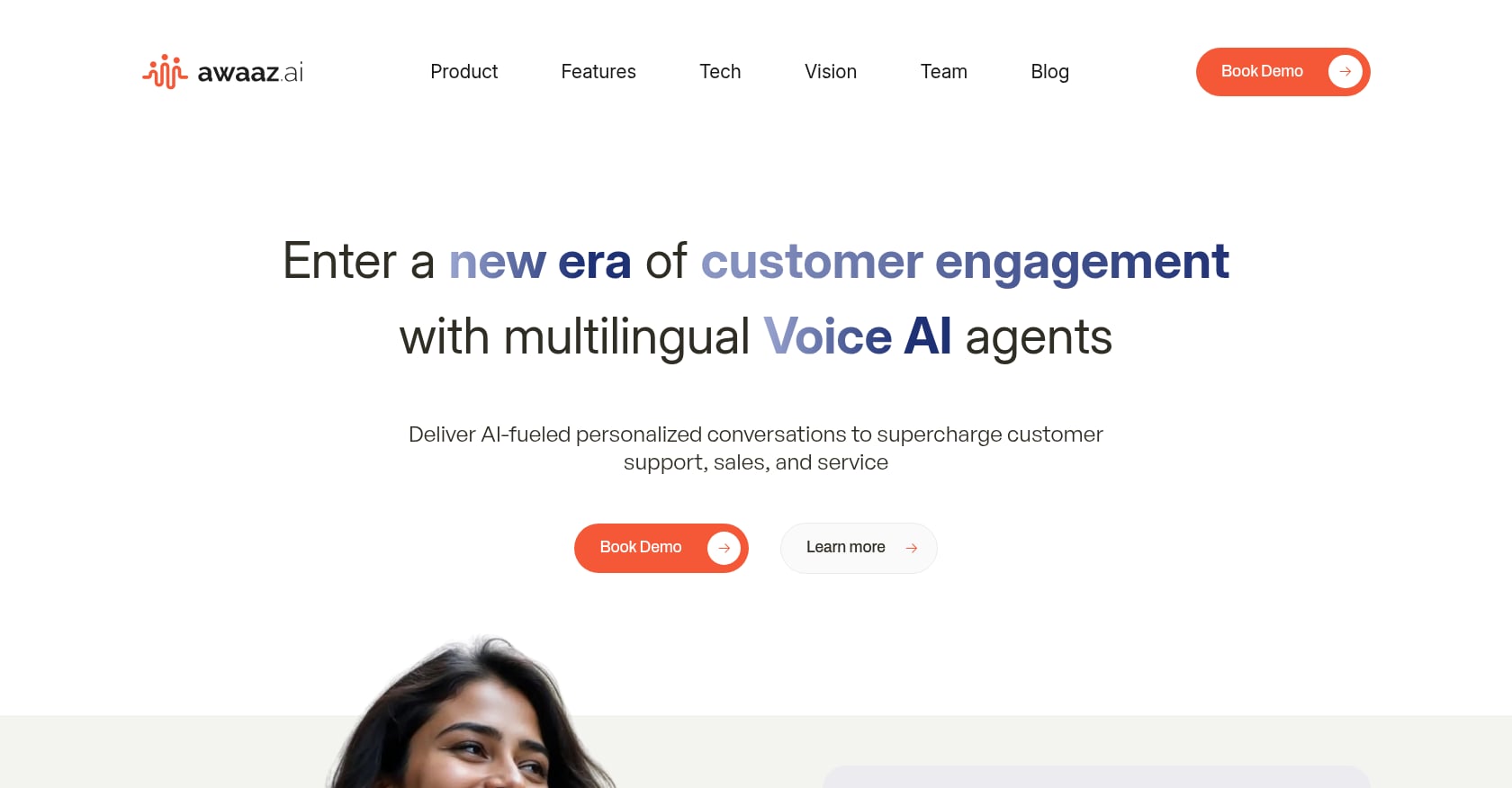
Best for: Indian BFSI teams (banks, NBFCs, MFIs, fintechs, small finance banks) needing multilingual phone and WhatsApp voice automation tied to real financial workflows.
Pricing: Pay-per-use pricing based on credits per minute of talk time. Plan tiers include Starter, Standard, Growth, and Scale. Exact per-minute rates require a demo conversation.
Key features:
- 8+ languages with vernacular and code-switching support (including Hinglish)
- Domain-specific agents for finance, health, commerce, and hospitality
- BFSI workflows: sourcing, KYC, credit eligibility, collections, reminders, retention, onboarding
- Voice-first omnichannel across phone, SMS, and WhatsApp
- In-house telephony stack built for low latency and high-scale calls
- CRM/CDP integrations and APIs
- Analytics that convert call data into structured, queryable insights
- Enterprise-grade security with human-in-the-loop escalation
Tradeoffs:
- Public pricing details are limited; buyers need to request a demo
- Public third-party review footprint is sparse compared to developer-first platforms
- Strongest positioning is India/BFSI; generic global enterprise buyers may want broader omnichannel suites
Why it ranks first here: For Indian financial services teams, the core question is not “which platform produces the most natural-sounding demo?” It is “which platform can complete a governed workflow in the borrower’s language, on a noisy phone line, with the right compliance controls and CRM sync?” Awaaz AI is purpose-built for that scenario. Its roots in Indian financial inclusion (evolving from Awaaz De’s work in voice-first services for microfinance institutions) give it domain depth that generic platforms lack. To understand how voice AI applies specifically to banking, read the guide to AI voice banking.
Choose it if you are an Indian BFSI operation that needs vernacular voice automation with human escalation, collections logic, and CRM integration. Avoid it if you need a developer API to build a custom voice product from scratch.
2. Gnani.ai
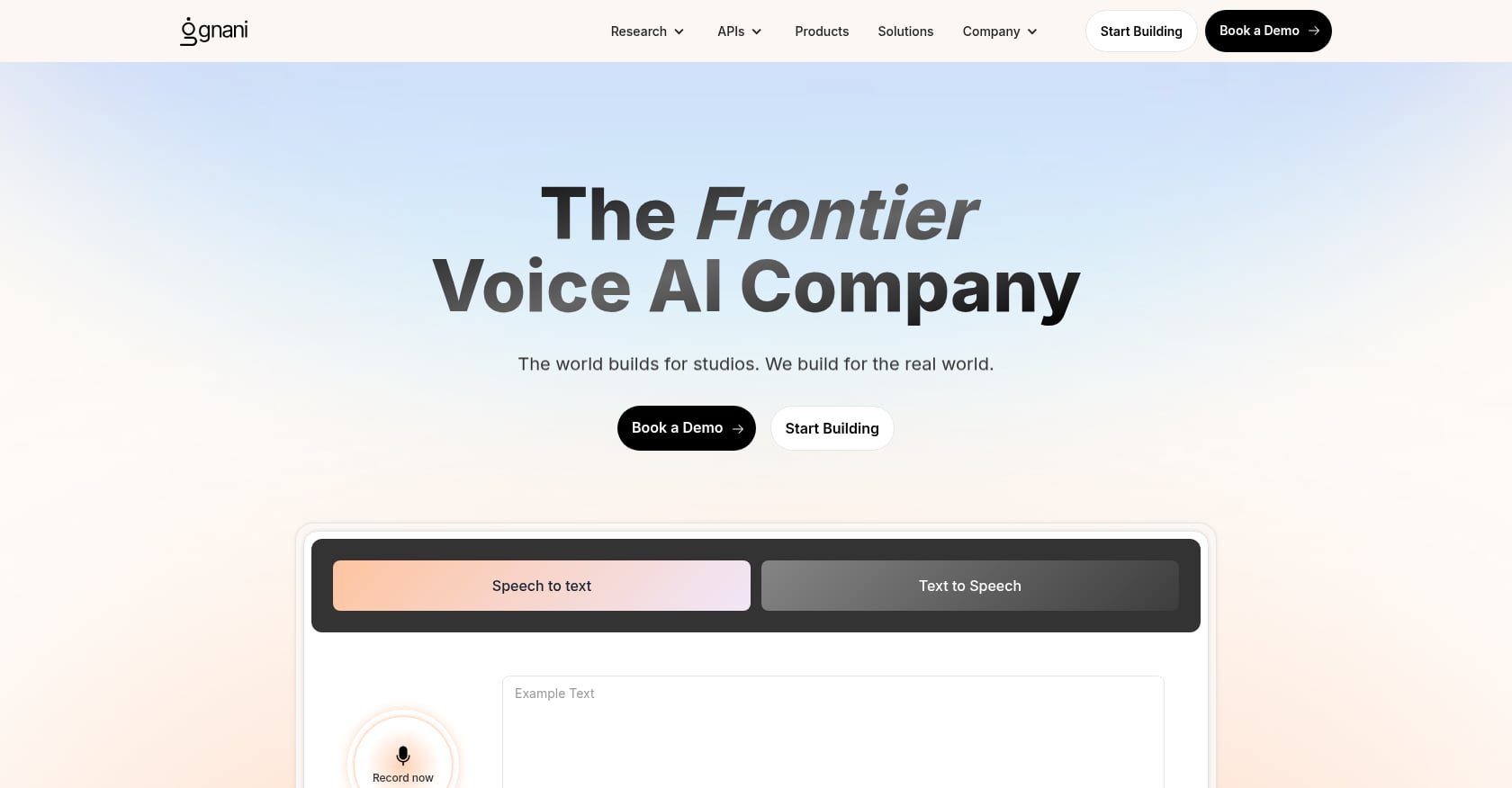
Best for: Large Indian enterprises needing deep Indian-language speech AI, voice biometrics, and enterprise-grade voice automation.
Pricing: Enterprise/custom. No transparent public per-minute pricing surfaced. G2’s seller page says there are not enough reviews to provide buying insight.
Key features:
- Voice agents, speech analytics, agent assist, and voice biometrics
- Vendor claims models trained on 14 million hours of telephonic audio across 40+ languages
- 200+ enterprise customers and 30M+ daily voice interactions (vendor claim)
- Inbound and outbound workflows with post-call analytics and CRM integration
Tradeoffs:
- Limited public pricing transparency
- Limited public third-party review depth on G2 or similar platforms
- Likely better suited to large enterprise deployments than quick self-serve pilots
User perspective: Practitioners on Reddit mention Gnani.ai alongside a small number of other platforms as standing out for India-scale voice reliability in BFSI production environments, though these are anecdotal comments rather than verified case studies.
Choose it if you are a large enterprise that wants a mature Indian-language speech stack and can manage an enterprise procurement process. Avoid it if you need self-serve setup or transparent public pricing.
3. Skit.ai
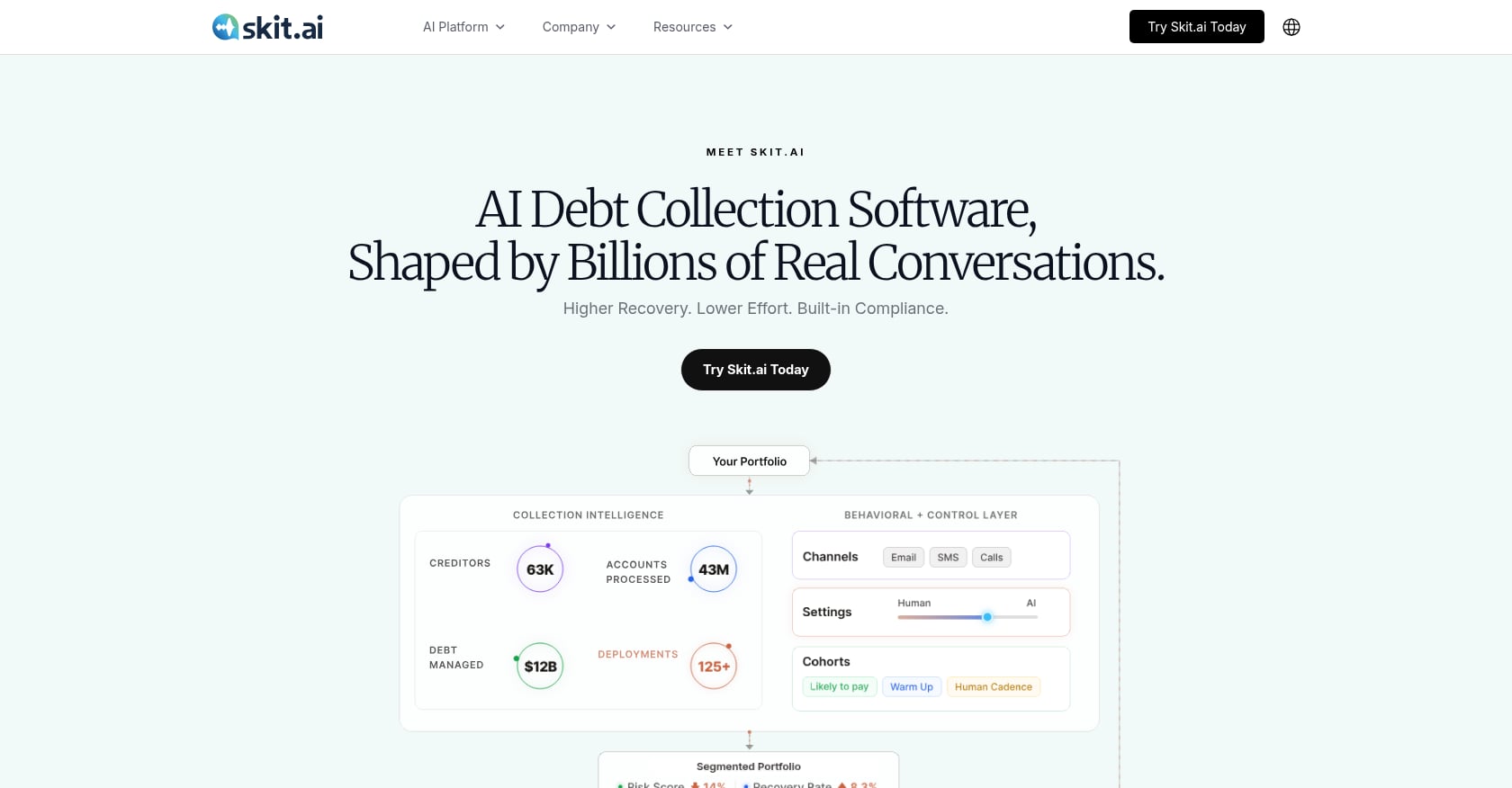
Best for: Collections and accounts receivable management, especially debt recovery workflows with compliance-heavy conversation logic.
Pricing: TrustRadius notes Skit.ai does not currently list pricing plans. No free version or trial has been noted.
Key features:
- Collections-specific voice AI with multi-step recovery workflows
- Omnichannel automation across voice, SMS, email, and chat
- Compliance architecture positioned around FDCPA, TCPA, Reg F, PCI-DSS, SOC 2 Type II
- API and SFTP integrations with CRMs, dialers, and payment processors
Tradeoffs:
- G2 shows only 3 reviews at 2.5/5, with cons citing poor reporting and missing features
- Gartner Peer Insights shows a separate 5.0 from a single reviewer (classic thin-sample conflict)
- Current public positioning leans more toward U.S. ARM/collections than broad Indian vernacular CX
Choose it if you are a collections team that needs recovery-domain depth and compliance tooling. Avoid it if your primary need is general Indian-language voice automation for customer support, onboarding, or WhatsApp workflows. For more on AI in the collections space, see the guide to AI debt collection calls.
4. Yellow.ai
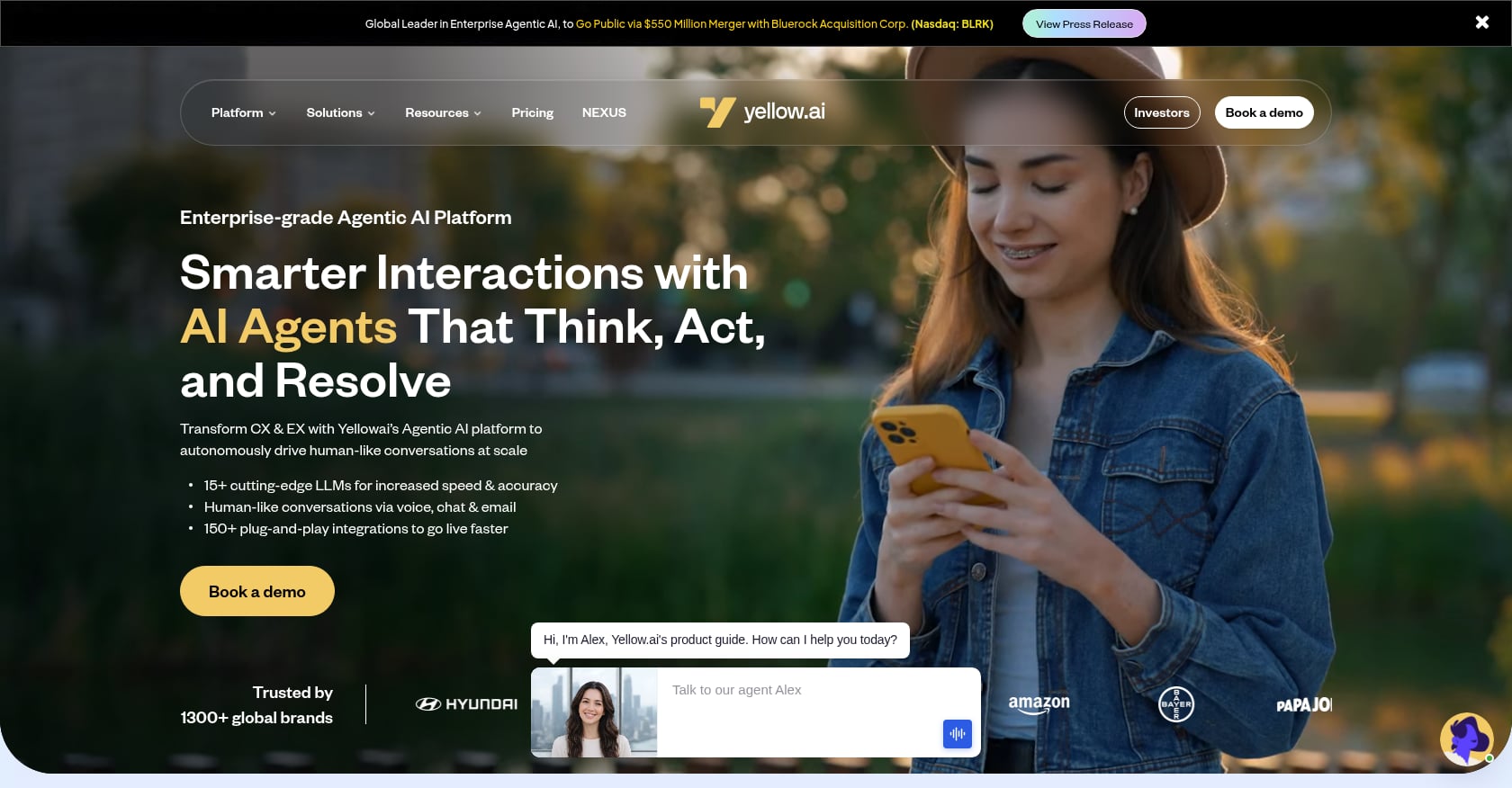
Best for: Large enterprises that want a single conversational AI platform spanning chat, voice, email, SMS, and messaging channels.
Pricing: Free plan includes 1 AI agent and 500 chat sessions per month. After that, $0.99 per resolution. Enterprise pricing is custom.
Key features:
- Omnichannel builder covering chat, voice, email, and SMS
- VoiceX for natural voice interactions
- LLM analytics, sentiment tracking, dashboards, campaign management
- Role-based access controls and compliance features
- Claims 135+ language support
Tradeoffs:
- May be too broad if the buyer only needs high-volume phone automation
- G2 (4.4/5 from 106 reviews) mentions a learning curve for new users
- Indian BFSI buyers should validate depth of voice workflows and code-switching, not just language-count claims
Choose it if your enterprise needs a unified platform for digital and voice automation across many channels. Avoid it if your priority is voice-first telephony for BFSI collections or EMI reminders.
5. Haptik
Best for: Enterprises in commerce, telecom, financial services, and travel that want conversational automation across multiple channels.
Pricing: Available on request. Third-party pricing guides cite high enterprise costs, but buyers should verify directly.
Key features:
- Conversational AI for multiple industries
- Omnichannel virtual assistants
- Analytics for trending queries, bot breaks, ROI, and interaction patterns
- NLU and workflow customization
Tradeoffs:
- Not always voice-first; chat tends to be the primary channel
- G2 (4.5/5 from 167 reviews) notes a steep learning curve and some feature limitations
- Pricing can be opaque for mid-market buyers
Choose it if you want a mature conversational AI suite and value commerce/support automation. Avoid it if voice-first BFSI phone automation is your primary need.
6. Ozonetel
Best for: Indian enterprises wanting AI voicebots layered on top of contact-center and telephony infrastructure.
Pricing: Enterprise-contract based. No self-serve or publicly listed pricing.
Key features:
- Agentic AI voicebots on contact-center/telephony infrastructure
- Hindi, Hinglish, and 10+ Indian languages
- CRM integrations with LeadSquared, Zoho, Salesforce, Freshdesk, and others
- Agent connect with context transfer, automated surveys, CSAT tracking, and intent analytics
Tradeoffs:
- Pricing is not self-serve or transparent
- Initial workflow and CRM setup needs implementation support
- Vendor-owned ranking content positions Ozonetel first in its own comparisons
Choose it if your operation is telephony-led and you want voicebots bundled with calling infrastructure. Avoid it if you need deep BFSI-specific NLU for code-switched financial conversations.
7. Kore.ai
Best for: Large enterprises needing no-code/low-code AI agents across service, process automation, and customer workflows.
Pricing: Not publicly listed. G2 reports an average implementation time of 2 months, ROI timeline of 7 months, and high perceived cost.
Key features:
- No-code/low-code agent building
- Broad language support including Hindi, Marathi, Tamil, Telugu, and many global languages
- Integrations with Salesforce, ServiceNow, Zendesk, WhatsApp Business, Slack, Microsoft Teams
- Automation, NLU, conversation editor, and live chat capabilities
Tradeoffs:
- G2 (4.6/5 from 474 reviews) notes a steep learning curve for advanced features
- May be heavier than needed for teams that only want phone-based voice automation
- Some users report slower support during implementation
Choose it if you need broad enterprise automation and governance, not just voice calls. Avoid it if you are a mid-size BFSI team looking for fast voice bot deployment.
8. Retell AI
Best for: Engineering-led teams, AI agencies, SMB automations, outbound qualification, and custom phone agent builds.
Pricing: Pay-as-you-go at $0.07/min. Enterprise starting at $8,000. Free trial with $10 in credits and 20 concurrent calls.
Key features:
- Voice, SMS, and chat interactions
- CSAT, latency, sentiment, and conversation outcome tracking
- Integrations with Twilio, ElevenLabs, OpenAI Whisper, HubSpot, Salesforce, Zapier, Make, n8n
- API-first with telephony flexibility
Tradeoffs:
- Requires internal ownership of prompts, workflows, integrations, testing, QA, and cost monitoring
- Not a full contact-center or omnichannel suite
- India/BFSI use requires custom language and compliance testing
User perspective: G2 shows 4.8/5 with strong review volume. Reddit builders frequently praise Retell’s production reliability, though many of these posts come from AI-agent community channels and should be treated as anecdotal.
Choose it if your team has engineering talent and wants fast iteration with transparent per-minute economics. Avoid it if you need a turnkey, compliance-ready BFSI voice platform.
9. Vapi
Best for: Developers who want a programmable voice agent layer with full provider flexibility and low-level control.
Pricing: $0.05/min platform usage, plus separate charges for telephony, transcription, LLM inference, and voice synthesis.
Key features:
- STT, LLM, and TTS provider choice
- API and workflow builder
- Usage-based pricing with no upfront commitment
- Composable architecture for custom builds
Tradeoffs:
- Only 3 G2 reviews (4.2/5), so review confidence is low
- Total cost requires adding platform, telephony, STT, TTS, LLM, and engineering time
- Not inherently BFSI-compliant or India-optimized without significant custom work
User perspective: Practitioners on Reddit report excitement around Vapi’s platform evolution but also flag reliability and cost concerns as usage grows. One builder noted that the $0.05/min platform fee is deceptive because the real per-minute cost after adding all components is significantly higher.
Choose it if you want a composable voice infrastructure layer and are comfortable owning the entire stack. Avoid it if you are a BFSI operations team that needs outcomes, not APIs.
10. PolyAI
Best for: Large enterprise contact centers (hospitality, banking, insurance, retail, telecom) that want a fully managed voice AI deployment.
Pricing: Not publicly available. Enterprise/custom.
Key features:
- Customer-led voice assistants for natural conversations
- Support for many languages, including Bengali, Punjabi, Urdu, and others
- Managed enterprise deployment and optimization
- Strong contact-center specialization
Tradeoffs:
- Pricing is opaque
- G2 shows 5.0/5 but from only 12 reviews (small sample)
- Less self-serve control than developer-first tools
- Indian vernacular and code-switching performance must be tested on real call audio
Choose it if you have large global contact-center volumes and budget for a vendor-managed deployment. Avoid it if you need self-serve control or India-first vernacular depth.
11. Cognigy
Best for: Enterprises needing voice, chat, and CCaaS orchestration with visual conversation design across existing contact-center infrastructure.
Pricing: Not publicly available.
Key features:
- Enterprise conversational AI for customer service
- Voice, chat, intelligent IVR, self-service, and agent assist
- Business-user-friendly, no-code/low-code orientation
- Strong fit in enterprise CCaaS environments
Tradeoffs:
- Pricing is opaque
- G2 (4.6/5 from 13 reviews) notes limited analytics and limited advanced flow possibilities
- Not India-first by default; vernacular depth must be validated
- Implementation can be more complex than point voice agent platforms
Choose it if you need orchestration across existing contact-center infrastructure. Avoid it if you are looking for a lightweight, India-focused voice bot platform.
How to Choose a Voice Bot Platform
Demos are necessary but insufficient. The platforms that sound great in a controlled 5-minute walkthrough are not always the ones that hold up at 10,000 concurrent calls with borrowers speaking Hinglish on a noisy street.
Here is a practical evaluation framework:
-
Workflow fit. Can it handle your exact calls? Collections reminders, KYC verification, loan status checks, payment confirmations, lead qualification, and renewal outreach are all different conversation patterns. A platform that excels at appointment booking may struggle with multi-turn financial workflows. BFSI teams in particular need domain-specific NLU trained on financial vocabulary, not generic intent classifiers.
-
Language fit. Does it handle your real code-switching patterns, not just clean single-language demo audio?
-
Latency and interruption handling. Does the bot respond in under one second on live calls? Can the caller interrupt it? Does it recover from silence or confusion? LangChain’s public analysis of voice agent architecture notes that the common STT-to-LLM-to-TTS pipeline forces teams to manage streams, interruptions, and latency at every hop.
-
Backend action-taking. Can it check or update your CRM, loan management system, core banking system, collections platform, or ticketing tool during the call?
-
Escalation quality. A voice bot that transfers without context is just a polite IVR. The handoff should include the transcript, captured fields, caller sentiment, reason for escalation, and next-best action. The human agent should never need to re-ask for the customer’s identity or problem.
-
Compliance controls. Audit logs, consent capture, calling-hour restrictions, DND handling, mandatory disclosures, and data residency all matter for regulated industries.
-
Observability. Can teams see failures grouped by language, campaign, queue, and intent? Can they catch compliance drift before it becomes a regulatory problem?
-
Pricing predictability. Can you forecast cost per outcome, not just cost per minute?
-
Implementation model. Self-serve, managed, enterprise custom, or developer API? Match the model to your team’s skills.
-
Proof. Real pilot results, customer references, review data, and production metrics matter more than pitch decks. As Vellum’s evaluation guide notes, buyers should look for stable performance under load, realistic TTS, barge-in support, clear pricing, and observability, not just voice quality.
For India: Don’t Ask “How Many Languages?” Ask “Can It Handle Real Speech?”
Most voice AI platforms claim broad language support. “40+ languages.” “100+ languages.” “135+ languages.” These numbers are almost meaningless for Indian buyers.
India’s voice AI challenge is not “support Hindi.” It is code-switching, accent variation, background noise, low-resource languages, mixed-script vocabulary, digits, addresses, amounts, borrower slang, and regulatory scripts, all within a single phone call.
A 2025 dataset paper on Hinglish code-switched speech notes that more than 250 million people in India engage in code-switched communication, especially Hindi-English mixes. This is not an edge case. It is the default way many Indian customers speak.
The 2026 Voice of India benchmark was built from unscripted telephonic conversations covering 15 major Indian languages across 139 regional clusters, precisely because real telephonic speech is a harder and more honest test than clean studio audio.
Practitioners on Reddit confirm this gap between marketing claims and production reality. One thread on Indian-language STT asks which providers actually work in production, noting that marketing pages claim 90%+ Hinglish accuracy while live performance often falls short. Another commenter points out that confidence scores are valuable because they at least reveal when the transcript is wrong, rather than silently passing bad data downstream.
A separate Reddit discussion highlights a specific but common failure: TTS APIs that handle casual Hinglish but break on numbers, amounts, pincodes, and mixed-language payment phrases. One commenter advises teams to build a benchmark from real support lines because “demos sound good but real scripts are where they die.”
For a deeper exploration of this challenge, read the guide to code-switching in voice AI.
How to test language performance before buying:
- Create a 100-call evaluation set from your own real call recordings
- Include 5 to 10 languages or dialect groups relevant to your customer base
- Include Hinglish and other code-switching patterns
- Include noisy calls, not just clean audio
- Include numbers, dates, EMI amounts, pincodes, loan IDs, names, and addresses
- Measure intent accuracy, entity capture, task completion, fallback rate, escalation quality, and latency
- Score results by region and language, not only as an average
The Real Cost of a Voice Bot: Hidden Pricing Explained
Most comparison articles list “$0.05/min” or “$0.07/min” as if that is the total cost. It often is not.
Developer-first platforms like Vapi explicitly separate the platform fee ($0.05/min) from telephony charges, transcription costs, LLM inference fees, and voice synthesis fees. Retell lists $0.07/min for voice agents but has separate enterprise pricing structures. Even platforms with “all-inclusive” per-minute pricing may charge separately for phone numbers, call recording storage, analytics, CRM integration, implementation services, compliance review, or support.
The true formula is closer to this:
Monthly voice bot cost = connected minutes x (platform + telephony + STT + TTS + LLM) + phone numbers + implementation + monitoring + human handoff + compliance/QA
For BFSI teams, “cheapest per minute” is the wrong metric entirely. The better metric is cost per outcome:
- Cost per right-party contact
- Cost per completed KYC verification
- Cost per promise-to-pay captured
- Cost per payment link accepted
- Cost per human escalation avoided
- Cost per qualified lead
A platform that costs more per minute but achieves higher task completion, better pickup rates, and fewer failed calls will often cost less per outcome. For detailed pricing analysis tailored to Indian banks and NBFCs, see the breakdown of multilingual voice bot costs.
BFSI Compliance: Voice Bots Are Not Just Automation, They Are Governance Systems
For banks, NBFCs, and MFIs, a voice bot is not just a productivity tool. It is a compliance surface.
TRAI defines “Robo Calls” as calls made using an artificial or prerecorded voice to interactively deliver a voice message without human involvement on the calling side. Subscribers making commercial communications using 10-digit numbers without proper registration are considered unregistered telemarketers. TRAI’s enforcement includes DLT registration, AI-led spam detection, mandatory number series, and disconnection of non-compliant senders.
Practitioners on Reddit confirm the complexity. One thread on TRAI compliance for AI voice agents describes how DLT registration, headers, consent, and compliance took weeks to piece together, with limited clear documentation available.
On the lender side, RBI’s notification on outsourcing of financial services states that regulated entities remain responsible for outsourced activities and for the actions of service providers, including recovery agents. A voice bot vendor is not a compliance shield. If the bot violates calling-hour norms, skips mandatory disclosures, or uses prohibited language, the bank or NBFC bears the regulatory consequence.
Compliance controls to demand during evaluation:
- Consent capture and call recording notices
- Audit-ready transcripts for every call
- Mandatory disclosure enforcement (not optional)
- Calling-hour controls by state and regulation
- DND and UCC handling
- Number-series and telemarketer registration compliance
- Data residency and access controls
- Human escalation triggers for high-risk conversations
- Script versioning with change logs
- Banned-phrase and harassment filters
- QA dashboards by workflow, language, and campaign
- Proof that the lender retains oversight, not just the vendor
For enterprise buyers who need to evaluate security and compliance artifacts before procurement, request the compliance checklist from Awaaz AI.
Run a Pilot Before You Commit
No amount of vendor demos replaces a live pilot on your own calls, with your own customers, in your own languages.
30-day pilot structure:
- Week 1: Scope one workflow (for example, EMI reminders or KYC follow-ups). Define success metrics.
- Week 2: Connect data sources and test scripts against real call recordings.
- Week 3: Run limited live calls with monitoring.
- Week 4: Compare results against a human or IVR control group.
Pilot metrics that matter:
- Connect rate and pickup rate
- Right-party contact rate
- Task completion rate (KYC completed, promise-to-pay captured, payment link sent)
- Containment rate (resolved without human handoff)
- Escalation rate and escalation quality
- ASR/NLU accuracy by language
- Language-specific failure rate
- Average handling time
- Response latency under load
- Complaint rate
- Compliance-disclosure adherence rate
- Cost per successful outcome
For a detailed pilot planning framework, see the guide to building an AI-assisted collections pilot.
BFSI buyers evaluating Awaaz AI for small finance banks can also review the procurement guide for step-by-step vendor onboarding.
Recommended Shortlist by Buyer Type
| Buyer type | Recommended shortlist |
|---|---|
| Indian BFSI, NBFC, or MFI | Awaaz AI, Gnani.ai, Ozonetel |
| Microfinance EMI reminders | Awaaz AI, Gnani.ai |
| Voice + WhatsApp workflows | Awaaz AI, Yellow.ai, Haptik |
| Enterprise omnichannel CX | Yellow.ai, Kore.ai, Haptik, Cognigy |
| Developer-led custom builds | Retell AI, Vapi |
| Large global contact centers | PolyAI, Cognigy, Kore.ai |
| Collections-specific automation | Awaaz AI, Skit.ai, Gnani.ai |
| SMB or basic telephony automation | Ozonetel, Retell AI (if technical) |
A simple decision rule:
- If you have AI engineers, telephony expertise, and QA bandwidth, consider developer platforms like Retell or Vapi.
- If you have BFSI operations owners who need outcomes (not infrastructure to build), choose a domain-specific managed platform like Awaaz AI.
- If you have enterprise CX architecture needs across many channels, consider omnichannel suites like Yellow.ai or Kore.ai.
- If you need Indian vernacular reach, do not buy any platform without a real-call language pilot first.
Conclusion
The voice bot platform market in 2026 is crowded with vendors making similar-sounding claims. “Natural voice.” “100+ languages.” “Enterprise-ready.” These phrases appear on nearly every product page.
What separates platforms that work in production from platforms that work in demos is specific and testable: latency under concurrent load, ASR accuracy on noisy Hinglish calls, compliance controls that cannot be bypassed, CRM integrations that update during the call, and escalation that passes full context to a human.
For Indian BFSI teams running collections, reminders, KYC, onboarding, or customer support in vernacular languages, the evaluation should start with whether the platform was designed for that reality, not adapted for it as an afterthought.
Evaluate Awaaz AI for multilingual voice automation built around Indian financial services workflows.
FAQs
What is the difference between a voice bot and an AI voice agent?
The terms are increasingly used interchangeably. Traditionally, “voice bot” referred to simpler automated voice systems, while “AI voice agent” implies LLM-powered reasoning, multi-turn conversation handling, backend actions, and intelligent escalation. In practice, most modern voice bot platforms now include AI voice agent capabilities.
How much do voice bot platforms cost?
Pricing varies widely. Developer platforms like Retell charge around $0.07/min, while Vapi charges $0.05/min plus separate telephony, STT, TTS, and LLM fees. Enterprise platforms like Gnani.ai, PolyAI, Kore.ai, and Cognigy use custom pricing. Awaaz AI uses pay-per-use credits per minute of talk time. The real cost is rarely just the platform fee. Factor in telephony, integrations, implementation, QA, and human handoff costs.
Which voice bot platform is best for Indian languages?
Platforms with the strongest India-language positioning include Awaaz AI (8+ languages with code-switching and Hinglish), Gnani.ai (claims 40+ languages with deep Indian telephonic training), and Ozonetel (Hindi, Hinglish, and 10+ Indian languages). Generic “100+ language” claims from global platforms should be validated against real Indian call recordings, not demo audio.
Can voice bots handle Hinglish and code-switching?
Some can. Most struggle. The challenge is not recognizing Hindi or English separately. It is handling mid-sentence switches, mixed-language amounts, pincodes, and borrower slang. Test any platform with your own messy, noisy, code-switched call recordings before committing.
Are voice bots compliant for BFSI collections in India?
They can be, but compliance is the buyer’s responsibility, not the vendor’s. RBI mandates that regulated entities remain responsible for outsourced activities. TRAI enforces rules around robocalls, DLT registration, consent, and unsolicited commercial communication. Any voice bot platform used for collections must support calling-hour controls, mandatory disclosures, audit logs, consent capture, and DND handling.
What is a good latency target for voice bots?
Sub-second response time is the baseline for natural-sounding conversations. Anything above 1.5 seconds creates awkward pauses that erode caller trust. Latency should be tested under load (hundreds or thousands of concurrent calls), not just with a single test call.
Should I choose a developer platform or a managed voice AI platform?
It depends on your team. Developer platforms like Retell and Vapi offer control and transparent per-minute pricing, but require engineering talent to build, test, maintain, and monitor. Managed platforms handle more of the operational burden. BFSI operations teams that need outcomes (completed verifications, promises-to-pay, resolved queries) rather than APIs to build with will typically get more value from managed, domain-specific platforms.
What should I test in a voice bot pilot?
Run real calls, not simulated ones. Measure connect rate, task completion, ASR accuracy by language, escalation quality, compliance-disclosure adherence, cost per outcome, and caller satisfaction. Score results by language and region, not just as a single average. A 30-day pilot with 4 weeks of phased rollout is a reasonable starting structure.